Archives for category: Uncategorized

In my studio there’s a ‘wet’ corner, and a ‘dry’ corner. The dry corner is where I’m sitting now, typing onto this computer. I have a large monitor-screen, linked to a Macbook, and a big drawing tablet and stylus (I’m no good with a mouse). Surrounding me are lots of notes, receipts, junk and not-so-junk mail, CDs and other stuff that I could throw away (or file) in an hour. Which I don’t. The dry corner exerts a ‘default pull’ (the computer).

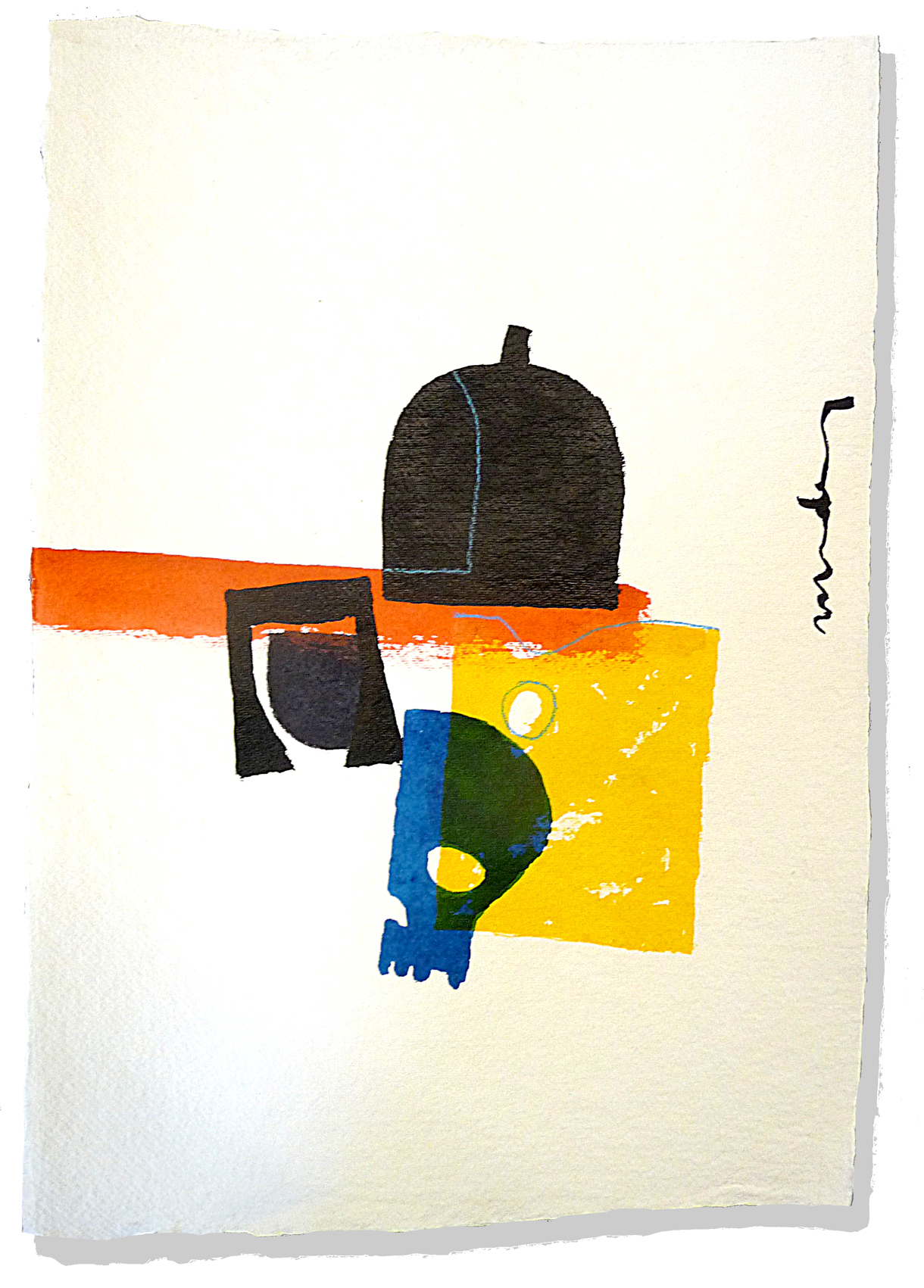
My wet corner is currently dry. It’s the art bit: a big drawing board with jars of brushes, bottles of watercolour, ink, pencils… I’ve been painting: flat and flattened still-lifes on thick rough-edged Khadi paper. I like domestic ingredients, pushed towards abstraction (but not quite there). I start with a big brush laden with Indian ink: make a shape. Look at it, decide what shape next, where, what colour, build the still-life as I go along. But it’s a nerve-racking process: it should be spontaneous, but it can go very wrong. There’s no correcting or over-painting with watercolours and ink – you just have to tear it up, start again.

I was watching a short film, courtesy of Creative Review, about how hand-painted signs in india are being replaced by digitally-printed ones, and how those highly-skilled (even visionary) artists are losing their livelihoods. Now, it seems, anyone with a copy of Corel Paint can take their design to a printer to produce a cheap banner or shop frontage, and make a big (often horrible) impact. I’m listening to internet radio on a computer, and Manu Dibango’s ‘Big Blow’ is generating extraordinary coloured patterns on the screen: unimaginably complex moving shapes, whirling and changing to each beat.

In the end, I ask myself: given the huge advances in technology – Photoshop (yes OK, I use it all the time), digital printing, CGI, 3-D movies, web sites, computer games – this huge bombardment of increasingly sensational visual stuff – are we getting desensitised to simple imagery? In the future, will anyone respond to marks made by a human hand?


(I declare an interest: some of my paintings will be shown in the Hearth Pizzeria, opening later in September, Lewes. Seen here is Still life: studio, with memento mori).
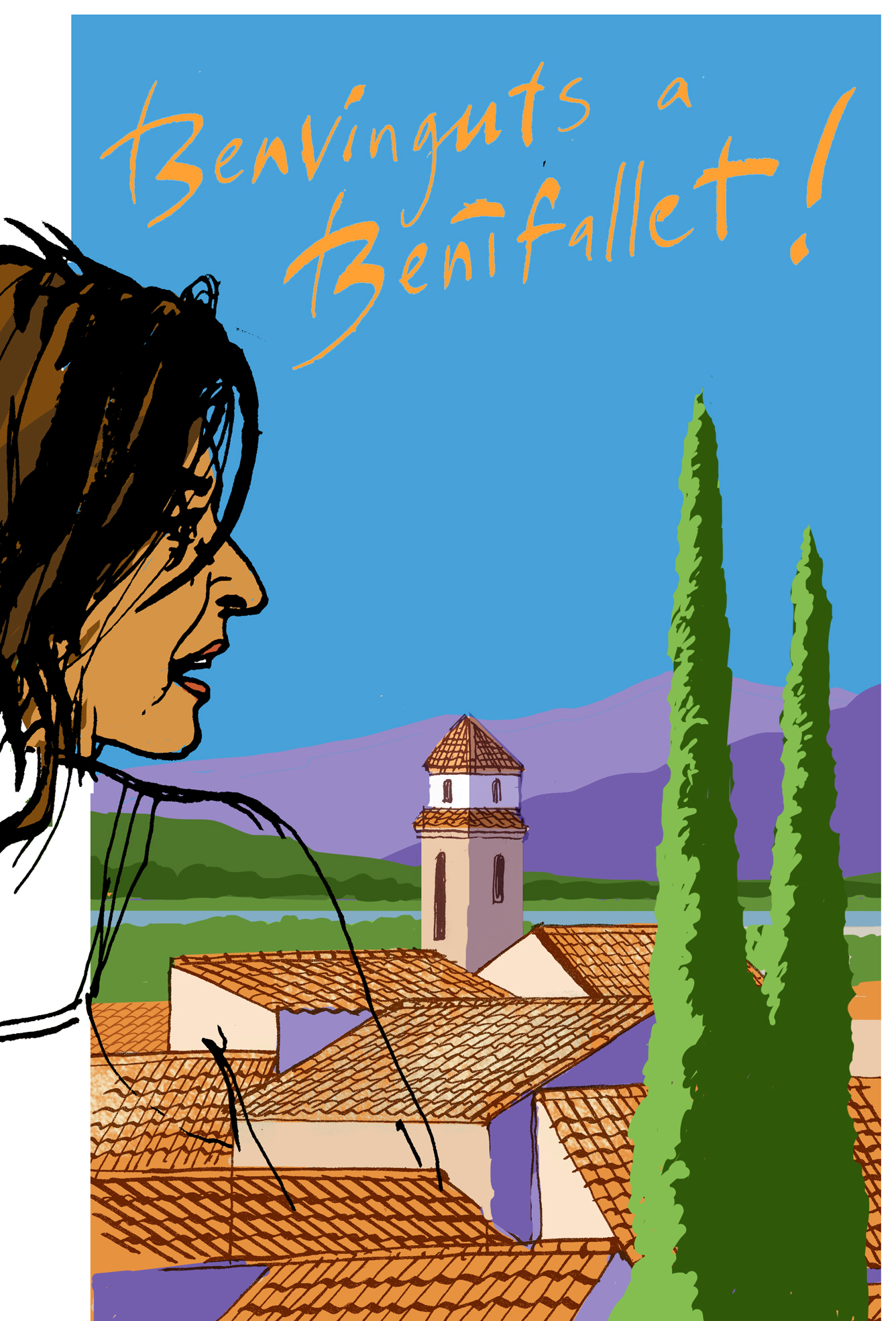
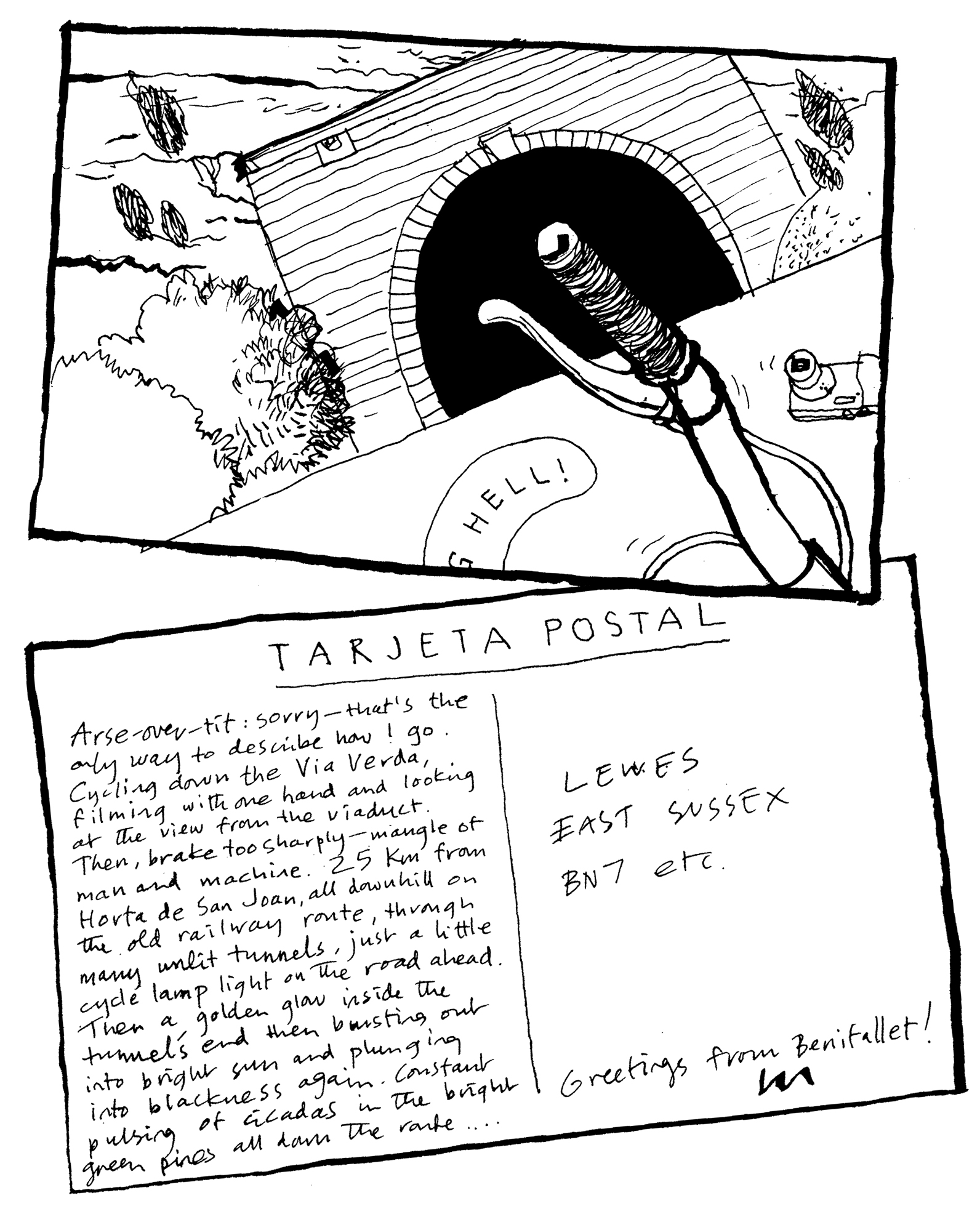
Benifallet lies on the river Ebre in Catalunya – a working village of steep paved paths between old houses, stacking up to the 13th-Century Ermita, once the parish church, but long abandoned. Its restoration is one of Amanda’s projects – or rather part of her project. Half-Catalan, half-English, Amanda is an artist, entrepreneur, gallery-owner, builder, human dynamo. And her project is to bring tourism to Benifallet – but without spoiling the charm of the place. Her Benifallet Community Project aims to build interest in the village through art projects that involve local people. She started with her mosaic murals, initially funded by the council, now un-funded, but she still works with found and reclaimed materials on the monoliths waiting along the riverbank.

She moved into her house 4 years ago, and immediately started hacking off plaster and knocking out walls with an energy and abandon that I can’t imagine. It’s another on-going project: apparent caves are strewn with angle-grinders, jack-hammers, old beams waiting to be inserted, cables and power-tools of all kinds. She bought a Citroen Dayane van (in the corrugated style) and muralled its bonnet with a view of the village, captioned El Projecte de la Communitat de Benifallet, and she seems to know everyone. And everyone knows her – and her passion and determination to do something for her adopted home.

http://www.galeriadebenifallet.com

My left elbow in Barbara’s palm, her leg in my right hand, we crash to the floor. Uninjured, we (fortunately) haven’t taken any of the others down with us. It’s a tricky manoeuvre: you offer your partner a hand, s/he places it on her/his (new pronouns please!) body somewhere, apply or withdraw pressure, they offer their hand etc etc. It’s fun, a bit like Twister, and there’s this interesting moment where you don’t know where your hand is going to end up. Or where you are (going to end up, that is).

Three choreographers, one after another, are here in the Methodist chapel hall (sprung floor!) to work us through improvisatory routines. Each has an hour, separated only by a water break, and admittedly, lunch in the nearby café. Rachel had us lying down, feeling and visualising the shapes we made with our bodies’ contact points on the floor; Laila had us working through the hand-place-pressure sequences, and stringing several together (before crashing to the floor, preferably); Toni made us give each other ‘screen-tests’: directing the auditionee/victim to act out a role. This is all so exhilarating, using your body, improvising with it, inhibitions falling away (as does your resistance to the dreamy gurgling music) and awareness becoming sharper.

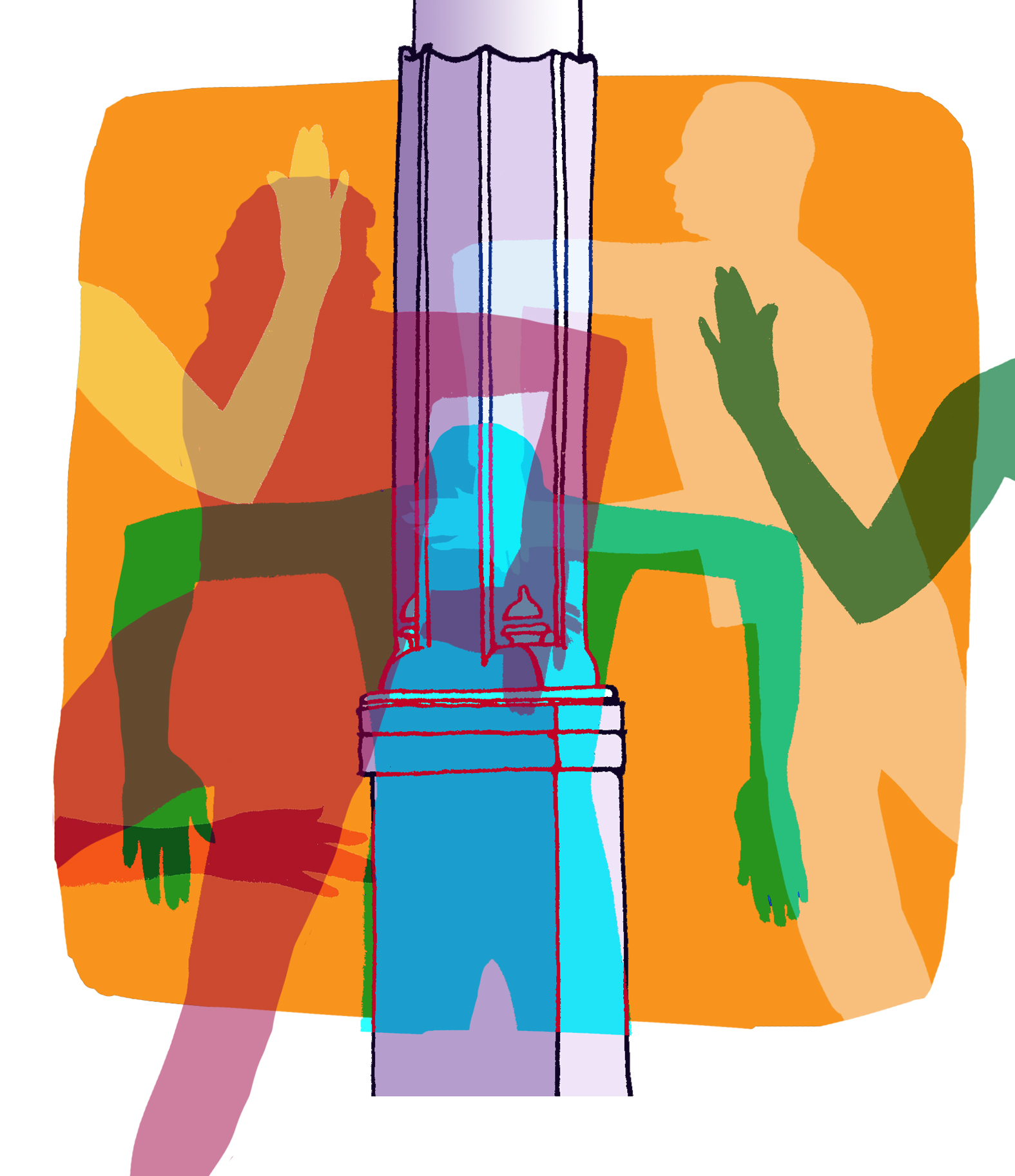
The Company finally gets to rehearse our dance piece in the venue where we’re to perform it: the Foyer Bar area of the Dome complex. It’s (of course) smaller than all the spaces we’ve rehearsed in, and (of course) it’s got a rather hard Regency/Art Deco pillar in the middle of it. Which we have to avoid. And somehow we do, winding into an ever-tighter spiral around it like a totem pole, before breaking out and into the final image. Finally, we know what it feels like. We run through it several times. The piece, not the pillar.

(Three Score Dance Company performs the new contemporary dance piece, Twice Upon A Time, choreographed by Bettina Strickler, on Sunday 15 July, Brighton Dome Foyer Bar, 5pm)

http://www.brightondome.org/threescoredance.aspx

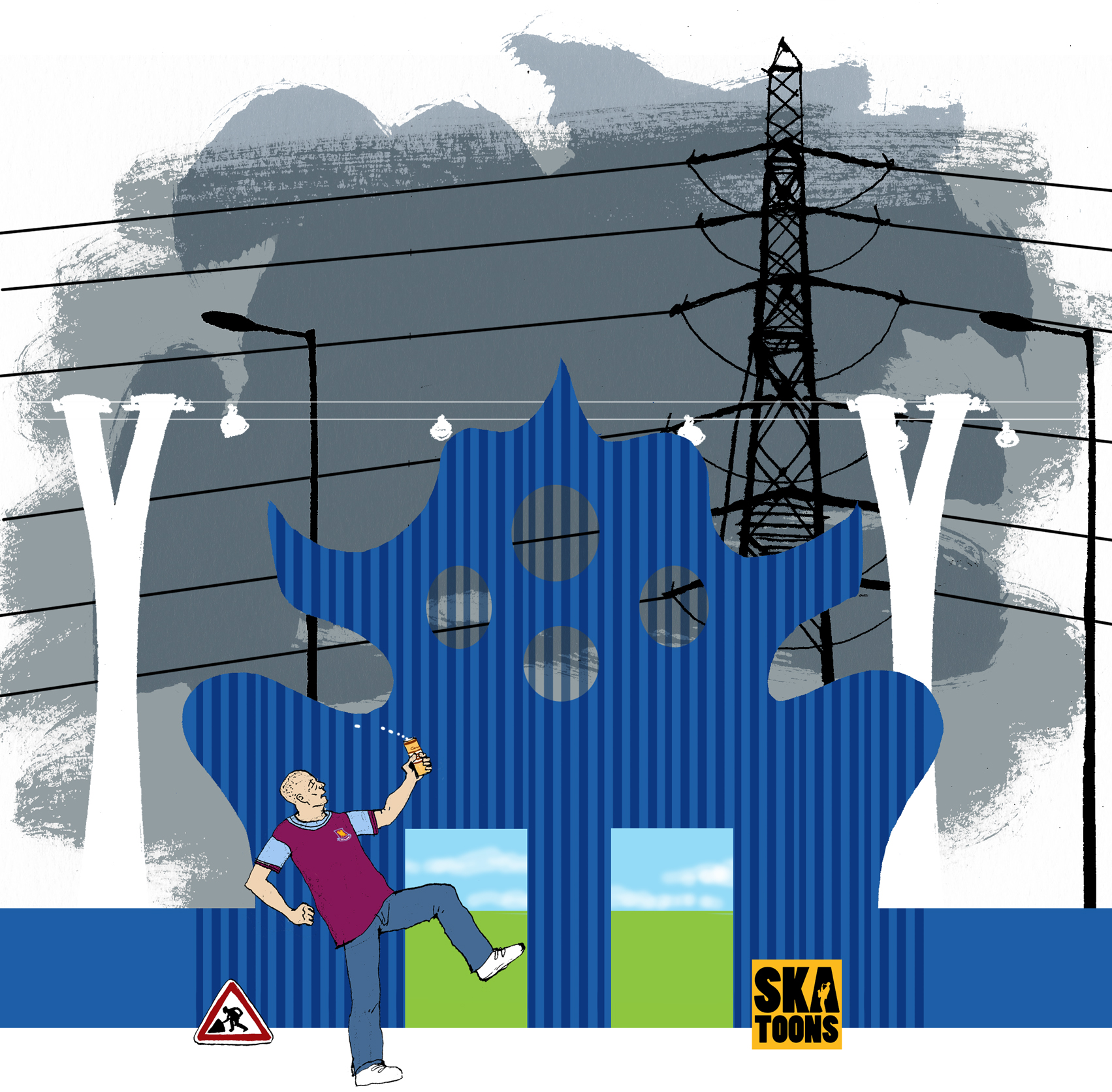
A lowering sky and squalls of rain. ‘Another fine mess you’ve gotten us into…’ is the received wisdom of the band. Canning Town, London, E16. This is a bit of a wasteland, metaphorically and actually. Canning Town is where the Royal London Docks used to be, and is in the five percent of most deprived areas in the UK. This space is a temporary one before developers move in in five years’ time. And the Canning Town Caravanserai project aims to bring local people into it, to build a local economy: selling their products and sharing ideas from pop-up kiosks. The principle is based on the Caravanserais which lined the Silk Road from Asia to the West, offering rest, food, water, trade and entertainment. Ska Toons is the entertainment.

Silvertown Way is a wide new  road, overlooked by the elevated new station, the new cable-car line crossing the Thames, big old pylons, and the afore-mentioned dark clouds. We’re to provide the music  for the mostly young designers, makers and entrepreneurs gathered to pitch their ideas to the Dragons (as in Dragons’ Den) and win rent-free kiosks. There’s a trade school under a plastic awning, mostly protecting them from the rain. The band is to perform in three kiosks: keyboards in the left plywood box, drums bass and guitar in the middle box, horns in the right box. We have to crane round the partitions to count off a song, and we’re fairly together. Musically, anyway. And we play well, despite our boxed-in-ness. Perhaps we should always be boxed…

People wander in through the oriental-style cut-out gates, attracted by the sound. They don’t come in too far though: perhaps they think it’s not meant for them, though it is. Davey, in West Ham football shirt and Special Brew can, sits by the entrance, nodding, and eventually dancing, and calling out for a Prince Buster song. As he loads his car, Martin is harangued by a local racist, complaining how the area has changed – “it used to be just us” (meaning white people), and leaves with the rallying cry – “Up the National Trust!” (sic).

http://caravanserai.org.uk/
http://www.skatoons.co.uk

(He meant National Front, a defunct English fascist organisation. The National Trust owns and manages historic British houses, gardens, coastlines, and is a thoroughly GOOD THING.)

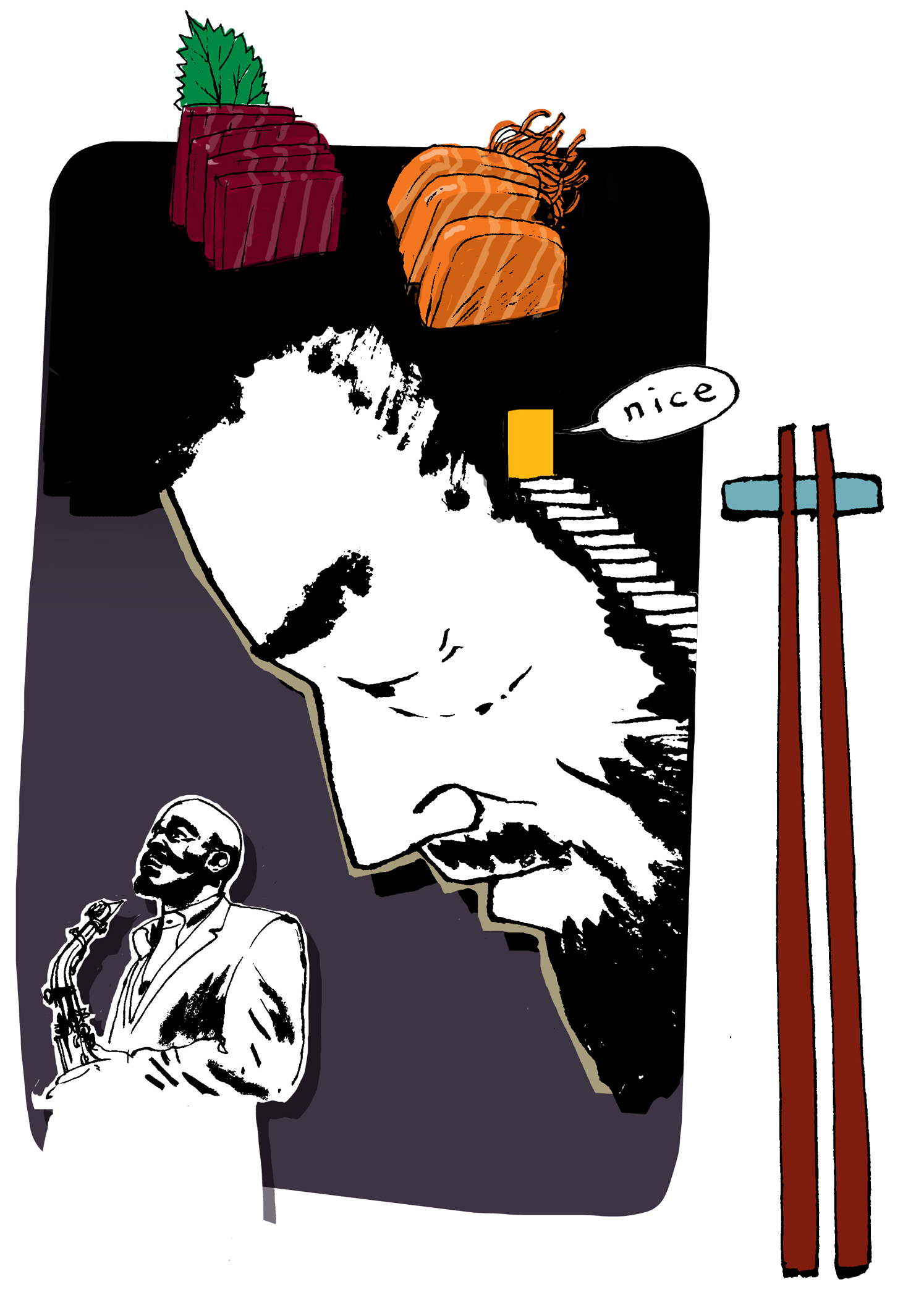
In a marquee, this cinema. We’re the first in, so we get the best table, right in front of the screen. To our left, a little video camera is pointing at a small black backdrop, under an Anglepoise. In the middle is a portable projector. To our right, a heap of musical and non-musical instruments: autoharp, electric guitar, tambourine rattles sticks laptop keyboard. Waiters wearing bandannas and short kimonos bring us sashimi, then tempura, a seafood platter, saké, beer. This is the Paper Cinema night at Moshi Moshi, Brighton. A three-course meal and two – what? films? performances, really. Because it’s all live.

Exquisite cut-out drawings, black ink on the reverse of cereal-box cardboard, are filmed, live, in front of the black screen, and projected, while two musicians play the score. Many cut-outs are manipulated by the two puppeteers, moving, one in front of the other, in and out of focus, side to side. Live cinema. The drawings are pen and brush-stroked, solid blacks, the faces minimal yet full of character, the stories surreal and gripping, the music full and rich. It’s enchanting, engrossing, though you can’t help glancing at the two puppeteers wielding their characters and scenery – bushes, rocks, clouds, stars – that they take in turn from a stack beside them. It’s beautifully low-tech, inspirational and heart-warming, in an age of computerised 3–D sensationalism.

Walking back, we drop in to the Verdict: upstairs a small café, but downstairs a jazz club. It’s nearly finishing, but we take our drinks down to watch Tony Kofi’s trio winding up their set with John Coltrane’s Alabama, written after the bombing of a black Baptist church by the Ku Klux Klan – sobering and passionate. A small, dedicated audience (why are jazz audiences so small and dedicated and predominantly male?) wants more, and Tony’s happy to play more, and launches, solo, into Charlie Parker’s Relaxin’ at Camarillo, with the tricky tune then echoed by the drummer, then the bass-player – thrilling. We walk back to the car, amazed at a great night out. All live.

http://thepapercinema.com/
http://www.tonykofimusic.com/
http://www.verdictjazz.co.uk/

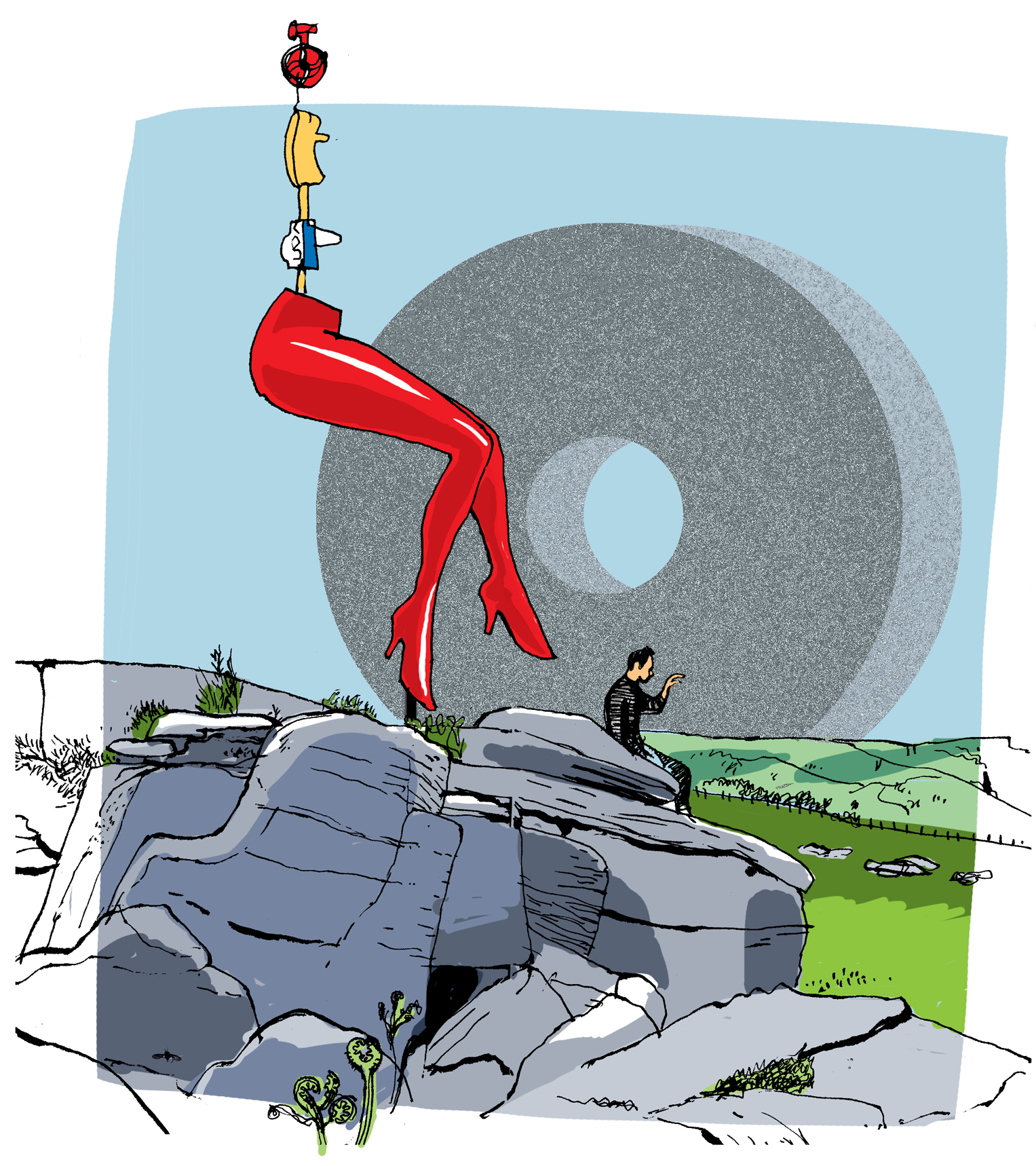
I sit, drawing, on a slab of millstone grit in the Peak District, while Max demonstrates a hand-hold for dealing with the peculiar nature of this sandstone. The rocks here make amazing shapes, weathered, in places, into particularly stupid-looking faces, and at the bottom of the outcrops, you can see the actual millstones carved out of the cliffs. These are, I guess, the less-than-perfect ones, discarded by their makers long ago, merged back into the landscape. I clamber about, my daredevil youth fighting with my fearful age. The horizontal cracks in the grit are weathered smooth on the top edge: in fact they’re not really edges, more curves, so are hard to grip. You have to wedge your hand into them, jam it in hard. I love the feeling of rock under my feet and hands, so solid… Walking up towards the outcrops are people with brightly-coloured folded mattresses on their backs, that they’ll put under their climbs, to fall on. Smart.

Joan Miró at the Yorkshire Sculpture Park! In the underground gallery, his smooth black anthropomorphs just beg to be stroked rubbed and polished. (Don’t worry, gallery attendant, I won’t. I know the rules). The massive characters face big bright lithographs, and constructions of found objects – a mannequin’s legs topped by a crude yellow head with a red tap-hat, a chair with shoes jutting out, coat-hangers and towels cast in bronze… a ‘phantasmagoric world of living monsters’ . And they do seem to live – they’re personalities. Scary and comic, sexy and serious, but playful and joyful. I bloody love Miró!

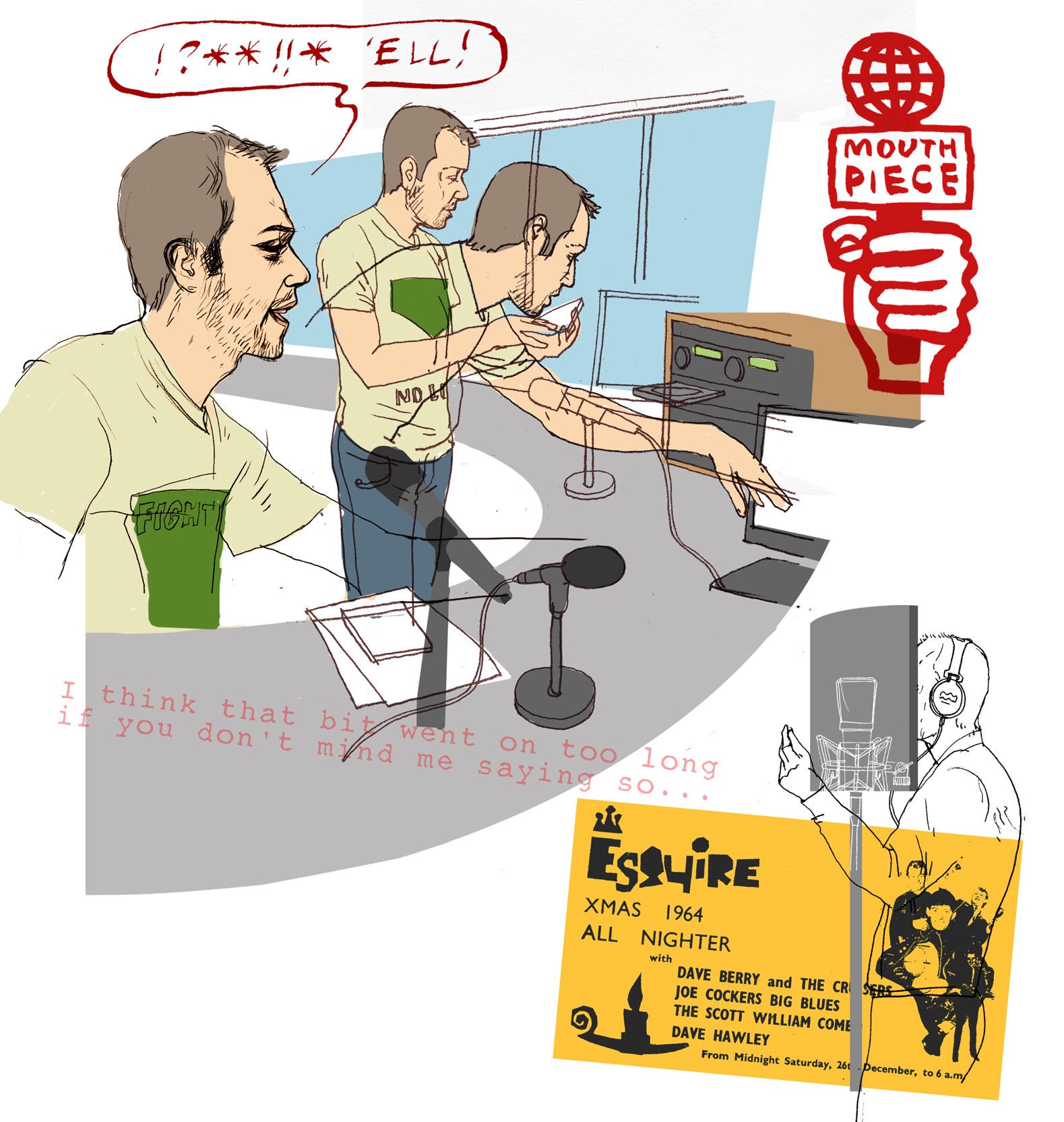
Fortunately the fader on the presenter’s microphone was slid to zero before the exasperated expletive escapes his lips. In the Sheffield Live studio, Max has just finished this Wednesday’s Mouthpiece, his weekly radio show that delivers ‘Sheffield stories, politics and culture – with a soundtrack of our times,’ to, well, Sheffield, and beyond. I must say, I haven’t exactly helped the smooth running of quite a complex operation by offering fatherly advice – while he’s setting up the next track, cueing up the pre-recorded interview, adjusting sound-levels, trying to coax out CD carriers that skulk inside their housing… As I say, I’m just trying to be helpful.

In the evening, we’re in Club 60. It’s like a small version of Liverpool’s Cavern: underground, it’s all brick caves. In the 60’s, it was called the Esquire, and featured Muddy Waters, Sonny Boy Williamson, Memphis Slim, the Kinks, the Animals…  Today it’s a recording studio, and Max, Paul and I are here to record the basic tracks for a version of ‘The Nearness Of You’. After they’ve put down the bass & drums, I immerse my head in a foam-lined metal hood: an inch from my mouth is a mic that cost more than my car. Much more. I like recording vocals into a dark void: expensive headphones and a touch of reverb make you sound great. Till the playback.

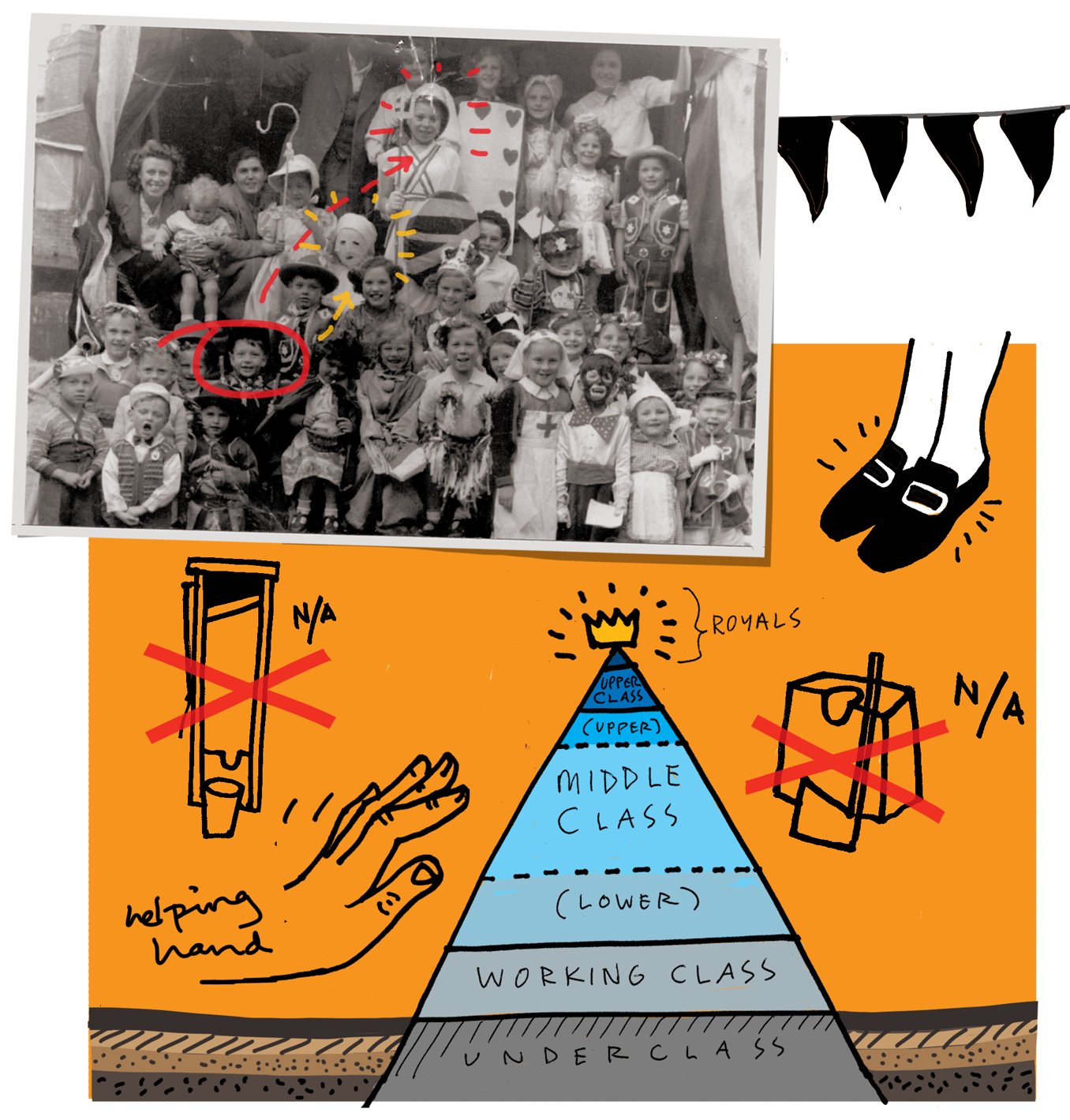
Look at this photo. I love it. Here I am, in Ilderton Road, Bermondsey, on Coronation Day, 1953. I’m in my new Hopalong Cassidy outfit, hat, gun, chaps. I rather fancy Britannia, in a 5-year-old way, but am scared of the 100-per-cent-burns victim behind me. I haven’t yet met a black person, so I’m not yet appalled by the blacked-up boy with the bow tie.

For some years after this was taken, I wanted to dress like your son: white knee-breeches, buckled shoes, red gold-frogged frock-coat… he’s a bit younger than me, but he was my fashion icon. He’s not now, no no no. Your coronation was just what the country needed after the war, in the midst of bomb-sites and real austerity. Although we did have a new National Health Service for people like us. (You can see where this is going, can’t you?) Your parents had done sterling service, touring the ravaged East End, bringing succour to the poor while bombs were still dropping. And, since then, you’ve done a grand job, being a Mother to the nations of the Commonwealth, dispensing wise and sometimes caring words on Christmas Day, and holding a rather dysfunctional family together. Ish. Not to mention what you’ve done for tourism!

Anyway: time’s up, Ms Windsor (respect – I don’t know you very well).  Thanks a lot, but 1300 years of monarchy is enough. Time to flatten the class pyramid, confound your family’s inheritance, and become Common. After all, you and your family have worn uniforms, and  even fought in wars, just like real people. Join us. No more Majesties, Lords, Ladies, Knights (in or out of white satin), Dukes, Earls, Duke of Earls, Counts… you can still be fabulously rich – that’s OK. There’ll be enough to share round your dependents, though I daresay a few palaces could be given to the nation – well, I suppose they’re ours anyway, aren’t they? in the long run?

Come on: enough’s enough. We’ve got the History, which is great: Offa, William, Richard III, Henry VIII, Charles I, etc etc. We’ve so much to look back on. Let’s look forward.

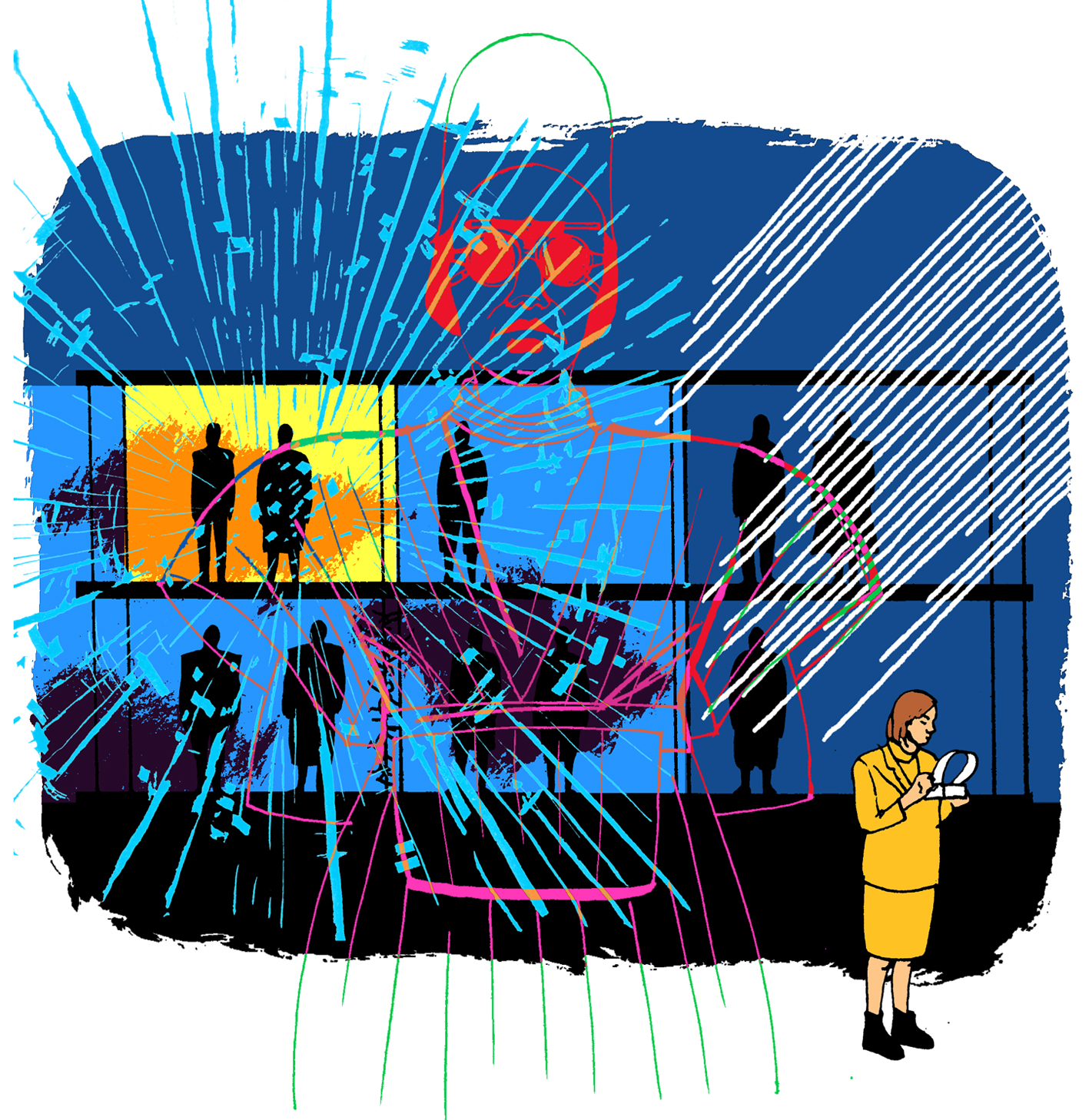
I can understand why some people walk out: they probably came for the Manga element in the performance of War Sum Up, at the Dome: ‘a multimedia manga opera on the nature of war, ghosts and superheroes’. But here are no big-eyed girlchildren with fox ears or spikyhaired boys with swords; there’s not much action at all. In fact, no action. Just ten figures in strange padded costumes, almost motionless behind layers of gauze. The action all takes place projected onto them: drawn images of eyes, hands, explosions, flowers, mouths. Which is where the manga comes in.

In front of the black grid a woman in a yellow twin-set plays a music-box, then sings the story, in Japanese; but she, like the other singers, is from the Latvian Radio choir. Created by Hotel Pro Forma, the Danish performance company; the libretto is based on texts from Noh theatre. The music is by the British band, The Irrepressibles. There are three stories – of The Soldier, The Warrior, and The Spy. But the sur-titles don’t help much. In the end, it’s about war being terrible for everyone.

But the visual and aural impact is astonishing. Phrases are repeated over and over, Glass-like, and initially you wish that it would speed up. Then you let go and bathe in the glory of the music and just let it be slow. Muti-layered images of brilliant colour explode over the singers as their voices soar thrillingly. Narrative? well… actually, it doesn’t matter too much. The Spy eventually transforms into a manga fantasy heroine, Super-Woman: tall and dominating in her wide shoulders, goggles and high-soled boots, she stalks the stage, a staff over her shoulder, a triangle moving. Gorgeous. War is hell though.

http://www.hotelproforma.dk