Archives for posts with tag: Michael Munday

Just off Pusher Street, at a table outside the whole food café, the plump girl is looking lost, as her cool slim friend is talking speedily, spliff in hand. I can remember that feeling, stoned in the open air in the afternoon. I could walk over to one of the hash-shops and buy a perfectly-rolled joint, but it’s been a long long while, and I can’t find any inclination. It makes me feel sad just to watch…

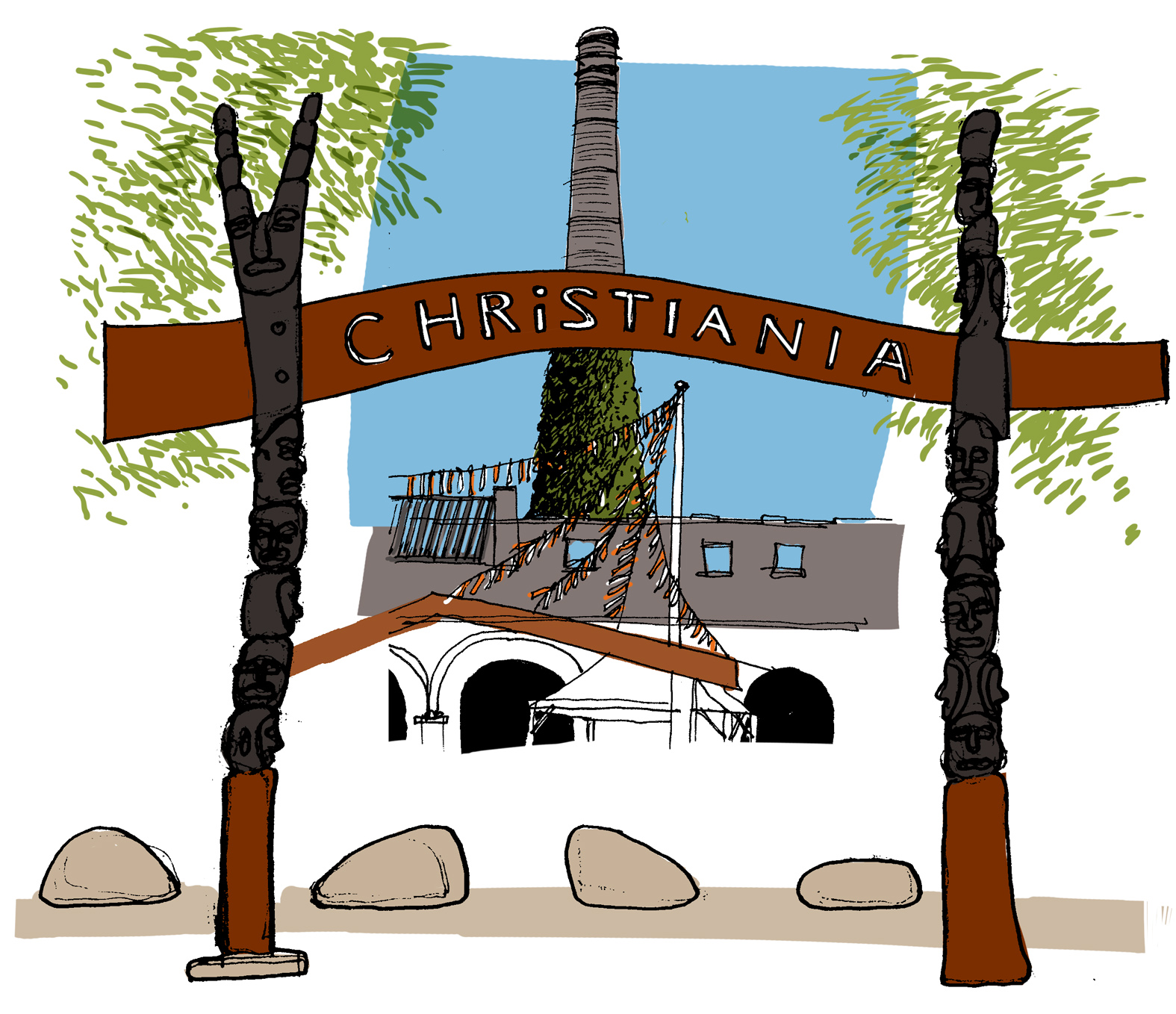
And, sadly, this is the received story about Christiania: you can sell, buy and consume marijuana here – not legally, but without being arrested. (I’m guilty of promoting this image, too: look how I started this piece). Christiania was (is) a brave experiment in alternative living. It’s a 32-year experiment, a ‘self governmental green Freetown’, in the former military barracks and parade ground in Copenhagen’s Christianshavn district. It covers 85 acres and has almost a thousand inhabitants. And a million visitors a year.

Since local people knocked down the fence in 1969 to get access to the abandoned space, people have made their homes here, planted gardens and playgrounds, governed themselves, represented themselves on the City Council, and fought off many attacks, often brutal, by the police and government. In 1972 they came to an agreement with the Ministry of Defence to use the area, and it was recognised politically as a ‘social experiment’.

There are trees and benches carved out of logs, meeting places, cafés selling doner kebabs, burgers, organic food, good espresso; the Christiania shop selling certificates of shares in the place, as well as T-shirts, hoodies etc. In the information hall, there’s a notice of Christiania’s Common Law: No weapons, no cars, no hard drugs, no violence, no bikers’ colours, no bulletproof clothing…

Residents on cycles with big boxes on the front weave in and out of the tourists, going about their lives; it must be like being a living exhibit. At our table are four older tourists (all right – my age) wearing expensive outdoor clothes caps and shades, and looking around them. Just like me.

‘But the dream of a life lived in freedom and the idea of a city ruled by its inhabitants continues.’

http://www.christiania.org/modules.php?name=Side&navn=linkeng
Over lunch of schnaps, herring, paté and beer, Karen tells Gill about her childhood. Gill’s, that is. Karen was the au pair for her family 50 years ago, and has many stories to tell about Life with the Lipsons, most of them new to Gill. Karen met Peter, her husband, in London then. He was a Danish cabinet-maker working over here, and they’ve been together ever since. Guests at their home near Faaborg, south-west Fyn, we are treated handsomely, shown the countryside and town, and plied with exquisite food and drink. And Gill’s early life.

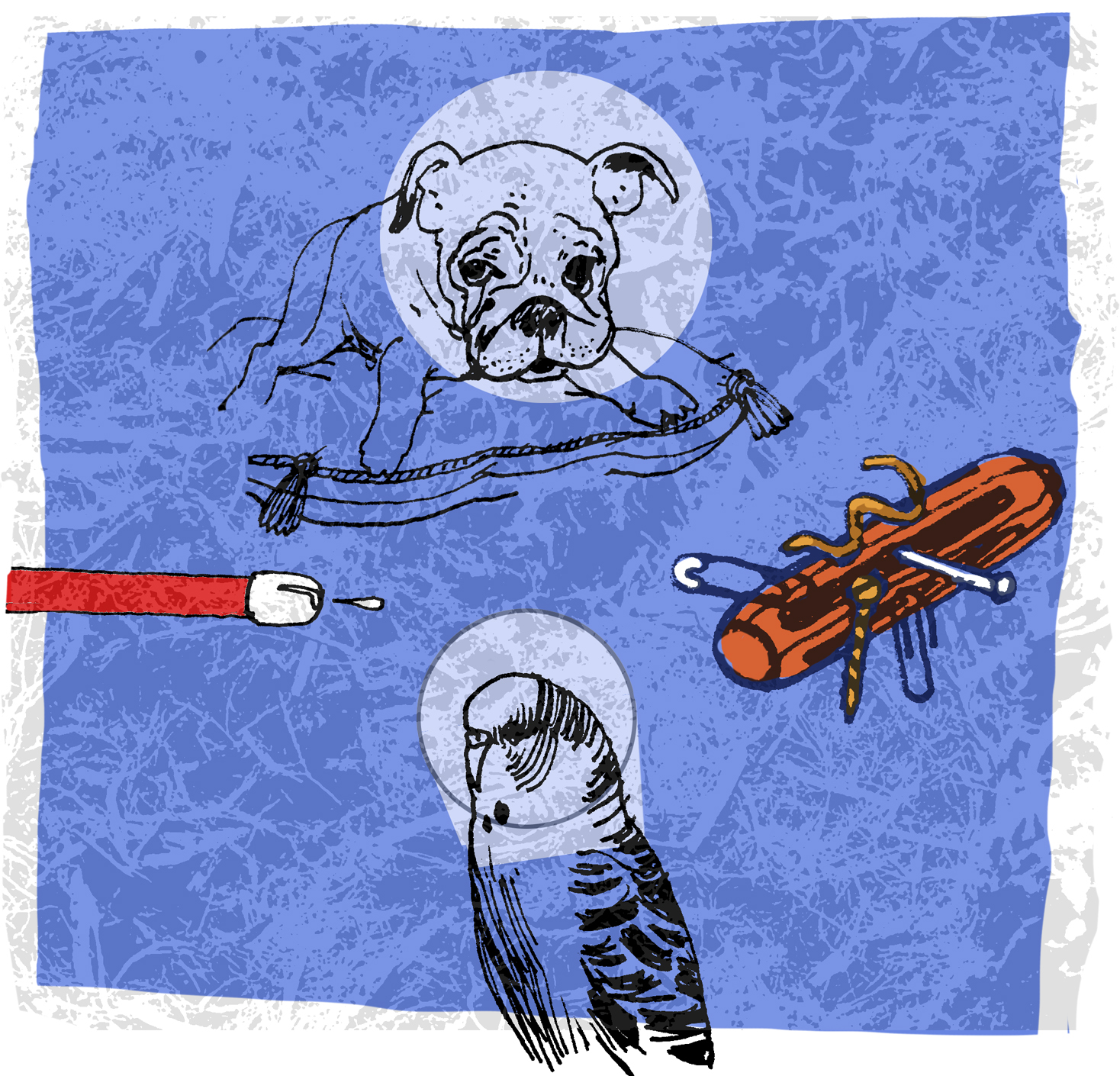
After cabinet-making, Peter became a designer and architect, and inventor. In his studio and workshop he shows us some of his ideas and products: a hair-treatment hood (hundreds of them, boxed and ready to go); a vacuum-pillow for radiology treatment; a wood-and-magnet, er, thing, that rolls around inside cows’ stomachs and collects all the bits of metal that they swallow with their grass; a simple sprung clip that stops your walking stick from sliding over onto the floor; a calf-feeding tube, a cat-pill-squirter, a pig-inseminator….

But his invention that even I (no great animal-lover) know already – though, sorry, it still makes me laugh – is the lampshade pet-collar, that stops animals from licking biting chewing fiddling with their dressings. Cats, dogs, rabbits, budgies the world over wear them (not fish or snakes though. But I like the idea of, say, a rhinoceros wearing one). Without a hang-dog face looking piteously out, I take this design seriously…

In Copenhagen I’m in the Design Centre, in the exhibition Hello Materials. There’s an alternative plastic made from fish-scales, artificial bone-growth material, floor-coverings made from recycled trainers, paint that lights up on your skin, soft stuff that goes hard on impact… exciting, cutting-edge, sustainable materials from the world’s scientists, inventors and designers.

In gold lamé jacket and matching shopping bag, bleached hair above black owl glasses, David Hockney strode across the page of The Sunday Times Colour Supplement, 1962. How cool!  An explosion of colour to bring the 50’s to an end. A flamboyant, cheeky enfant terrible from the Royal College: an inspiration to a 15-year-old arty kid. Suddenly art was about personality, even showmanship, as well as the stuff on the canvas. But that stuff on the canvas was wonderful – a mixture of private desires writ large in big expressionistic brushstrokes, lettering and jokes, wry post-modern comments on the nature of painterly illusion. I loved the messy early paintings. And then I loved the tight flat acrylics from California, and especially his crayon drawings: I bought Caran D’Ache Prismalo crayons, and Schoellershammer paper.

There are many reasons why the English love David Hockney. His paintings are (generally) representational, colourful, and easy to understand. For all his years in California, he’s still got his Yorkshire accent, and he speaks engagingly, fluently, down-to-earth. And he projects his enthusiasm, for looking, for experimentation, for the world around him.

‘David Hockney RA: A Bigger Picture’ at the Royal Academy, fifty years on. It’s quite overwhelming, the sheer scale of his exhibition, filling these huge galleries, apart from the massive size of the paintings. His output is astonishing. You might say it’s about quantity, but the impact of the colour is thrilling. Vast canvases of the landscape of the Yorkshire Wolds – brilliant purples pinks bright greens – you get a sense of his joy in seeing and translating his vision. In the largest gallery there are 51 iPad drawings, drawn in the landscape, and they’re blown-up to about 7 feet high. It’s a joyful exhibition.

It’s an early spring day – blue sky, unseasonably warm, and Gill and I are following a walk from a laminated A5 sheet’s instructions, as in, ‘turn left along the edge of the field until you come to a stile…’. We started in Laughton, going north then round to the west and back down across the main road, towards the Laughton tower. In the bright sunlight there are the first traces of growth on the trees, and strong shadows, and it’s a Hockney landscape…

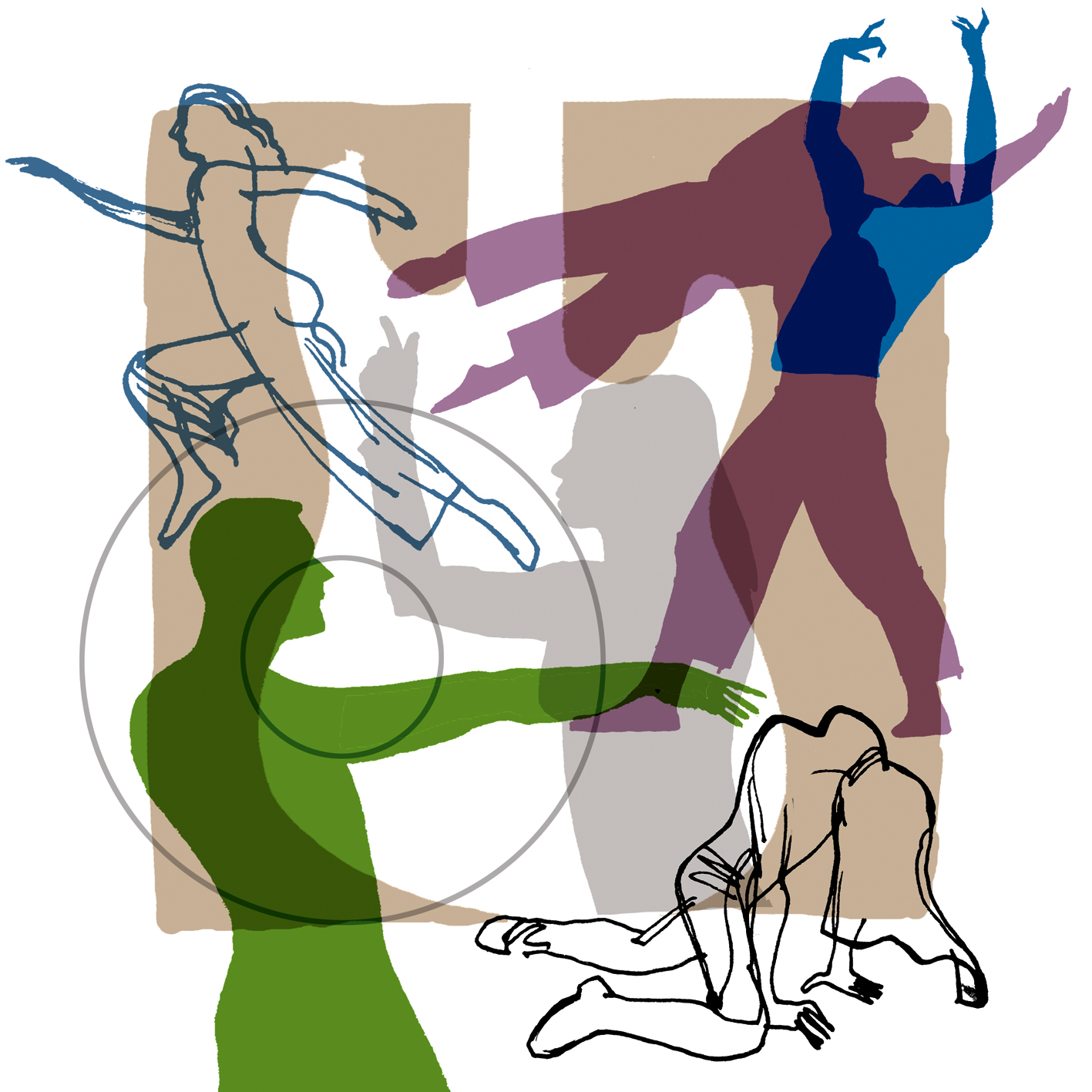
Five Stratocasters on stage playing themselves. Mirjam has come on and turned up the volume knob on the Strat lying on its back: the low hum from the amp beside it sounds throughout the whole piece. But the others have a 12″ record mounted on the front of each, and as it revolves, it brushes a tremolo-drenched chord from the strings. She gyrates very slowly, leaning back to the floor, with incredible control. A tap-dancer sets up a slow rhythm – other dancers join the rhythm, and it builds, one of them crunching out an edgy riff on the guitar…

This is a performance by Candoco, the company that includes so-called ‘disabled’ dancers among its members. But that word really doesn’t apply here: the power, control, grace and beauty of their movements make it meaningless. A solo piece: Vicky comes on, in silence. She’s wearing an extraordinary outfit – as unlike contemporary dance as you can imagine. It’s a burlesque version of Wonderwoman, black and rhinestoned bikini, knee-high boots, headress with huge blonde hair spilling out. She approaches the audience, smiling, almost offering herself, this is me, hello, yes – me. Sort of sexy, but self-mocking, with each move turning to the audience: ‘Well?’ Funny too. Then suddenly there’s dry ice and a pounding house/disco track kicks in and she’s singing, and dancing: ‘This Is It!’

I’m on the huge Dome stage the next day, with two of their dancers and the rest of 3Score Dance. Mirjam takes us through Qi Gung exercises, and then she and Dan get us to walk the space, claiming it, then walk at half the speed, then half again, till we’re barely moving, (trying not to fall over). We’re tightly knotted together, echoing the shapes of each other’s bodies, still slow. Intensely physical and extraordinarily liberating.

This is it!

Homepage


http://www.michaelmunday.com

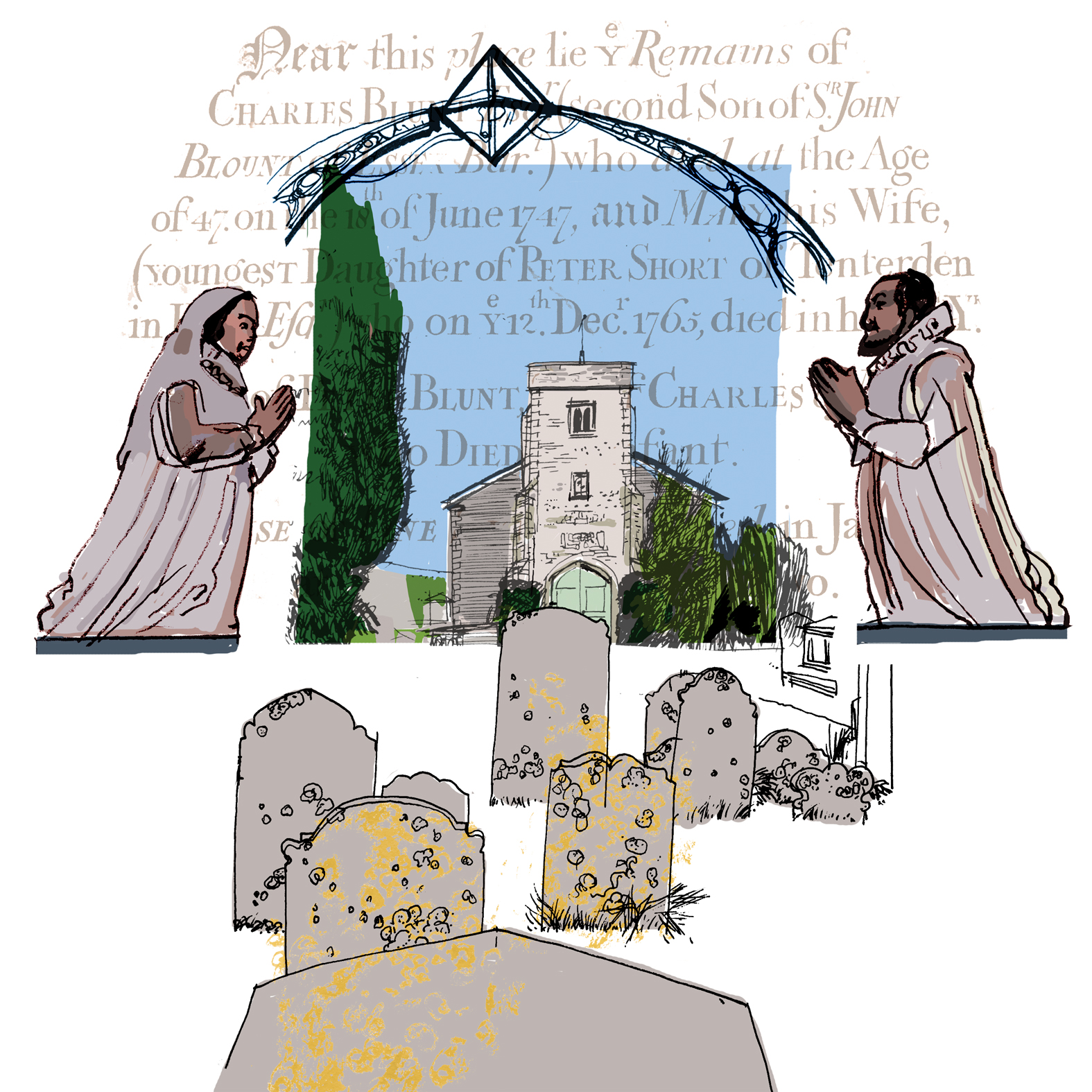
The cold of the grave creeping into my buttocks, a pigeon calling, a blackbird singing: I’m in the shade of a solid dark yew in the All Saints churchyard, drawing the sunlit gravestones in front of me. Many of the inscriptions have disappeared, they’re so old, and they’ve become an installation that is more sculptural than commemorative. That’s appropriate, too: the church of All Saints (first mentioned in 1148) has been an arts centre since 1980. And I declare an interest: over the years I’ve played in bands on this stage, had a birthday party here, helped set up the Lewes Junior Film Club adventures here, watched films from its utilitarian seats, drawn it, photographed it, and swept up in it many many times. I love the place.

Inside it’s plain, except for the ornate memorials to the benefactors of the Parish, the great and the good of their times. Iohn and Iane (where I=J) Stansfield – ‘of the Cliffe nere Lewis’ – face each other, kneeling, and separated by their plaque; painted face cracked and dark with age, Iane regards her husband suspiciously, eyebrows raised over divergent eyes. He’s a Gent., though, who ‘hopefvlly ended his mortall life’ in 1626. Iane ‘his deere wife’ died 24 years later.

The sound of the organ drifts through the empty place – above the stage, in an orange glow, a bowed figure playing is half obscured by the deep dark drapes. In the back hall, the mirrors reflect the sinister looping trapeze ropes hoisted up into the high ceiling.

In All Saints there’s salsa, can-can, ska, capoeira, film, drumming, the Oyster café, blues, comedy courses, zumba, art workshops, a toy library, theatre, Nature’s Rhythms… Iohn and Iane had no idea that the All Saints church would become such a lively and creative place. And ‘hopefvlly’ – that’s how we should live.

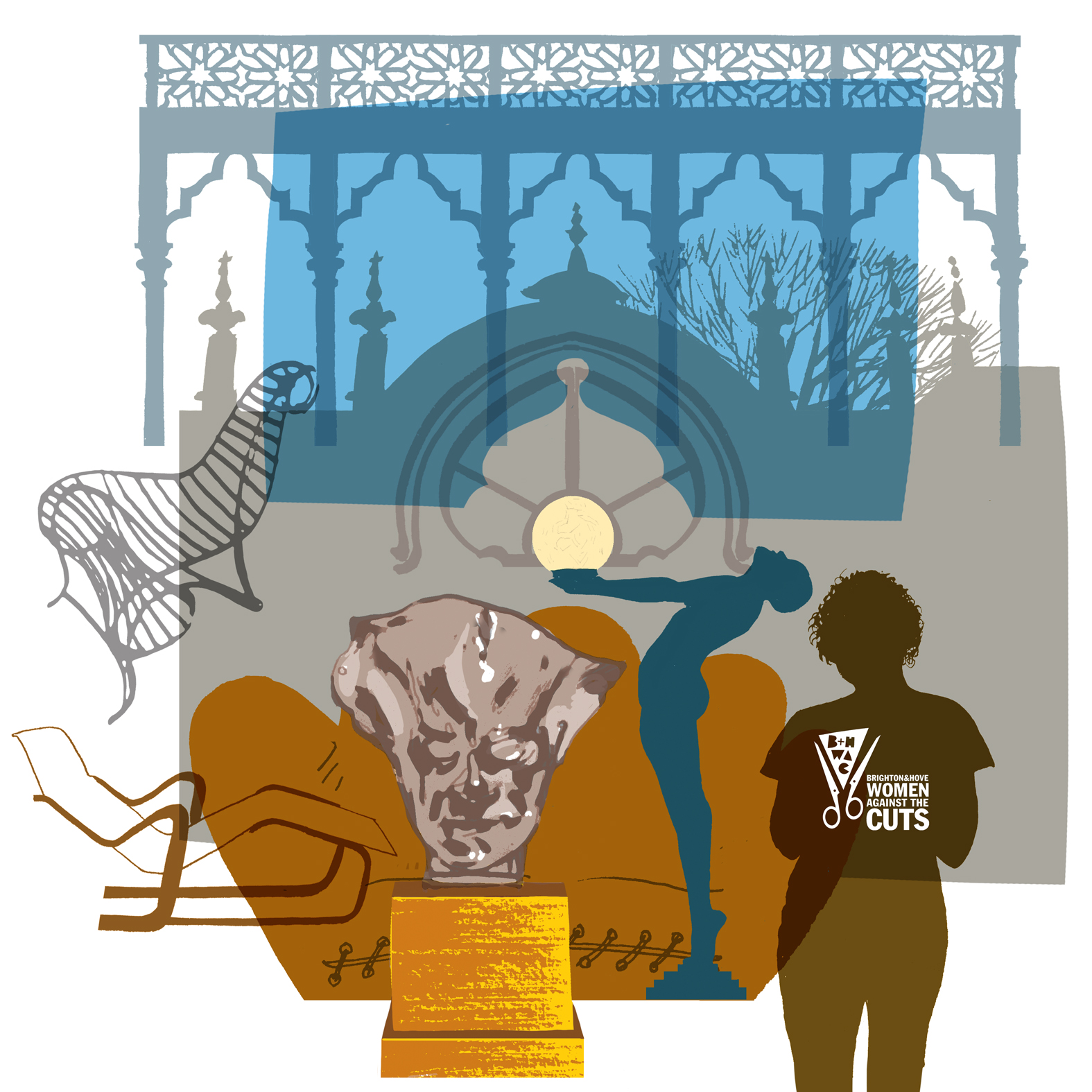
Brighton in the sunshine! Glare on the dome of the Dome, and a huge snaking purple shadow of a tree fanning across the paths and grass of the Pavilion Gardens. There’s the hypnotic pattern of the mbira played by the Zimbabwean busker, his back to the Pavilion fence. I’ve been watching the BHWAC flash-mob’s reading of a Maya Angelou poem outside the Library to mark International Women’s Day, and now I’m heading for a favourite place.

I love the main hall of Brighton Museum, the 20th-Century gallery. Through the ogee-shaped entrance, to your right there’s the display of chairs, curves in plywood, metal, cardboard – extraordinary radical designs, then a huge A-rack of classic designs – leather, steel, bright orange. On the left there’s the ‘baseball-glove’ chair in brown leather, and, of course, Salvador Dali’s ‘Mae West’s Lips’ sofa in red velvet. Henri Navarre’s translucent bust of Beethoven from 1930, its gold plinth atop a Lalique glass and metal table, is bright against a dark lacquered screen. Further down, two naked men eye each other in David Paynter’s L’Après-Midi. It’s the sexiest image in the gallery – with the possible exception of Dali’s sofa.

The ‘Oriental’ style building, beautiful art, craft and design objects everywhere, the Mods&Rockers display, ancient Egypt, the Dirty Weekend – and coffee and cake. Excellent.

A dark canopy above me spider-like: it’ s the first time I’ve slept in a four-poster bed. It’s an Indian four-poster: ruched fabric with a pattern of elephant and rider, carved headboard, and little elephant tables round the huge room. Through the tall windows the lawns spread around, and below is the curved glass canopy stretching the depth of the house. The Old Rectory in Dorset, built in 1730, with the wings added in 1814, was reputed to be the largest and one of the most beautiful rectories in England.

This is a Country House Weekend (but without servants – it’s all upstairs). An elegant wooden staircase spirals up the middle of the house, and the landings lead off to rooms beyond rooms – eleven bedrooms, bathrooms with roll-top baths (and all modern conveniences). In the 80’s – 1980’s – it was run by its owner as a small art school and an artists’ and writers’ retreat, and there are paintings and scuptures everywhere.

The house is a real character: exquisite and rather precious on the website, it feels lived in, and comfortable. Through the front door, through another door, now, left/right? past the Elizabeth Frink print, the waist-high metal jar, a limbless plaster torso, left into the huge living room with a grand piano, big fireplace: it’s an achievement to have found this room. Friends arriving late wouldn’t know the house was inhabited save for the piles of boots in the hall.

The treasure hunt: there’s scurrying up and down the stairs, people bumping into each other, or trailing through the rooms, lost and suspicious. As the organiser, I’m enjoying watching, and I think I’m pretty smart with my clues. Not that smart, though: it’s won by a team who jumped ten clues and found the treasure – a golden box of Bonne Bouche truffles – nestling on the bottom A strings of the piano (clue: ‘How Grand A Bottom Sounds!’) by chance.

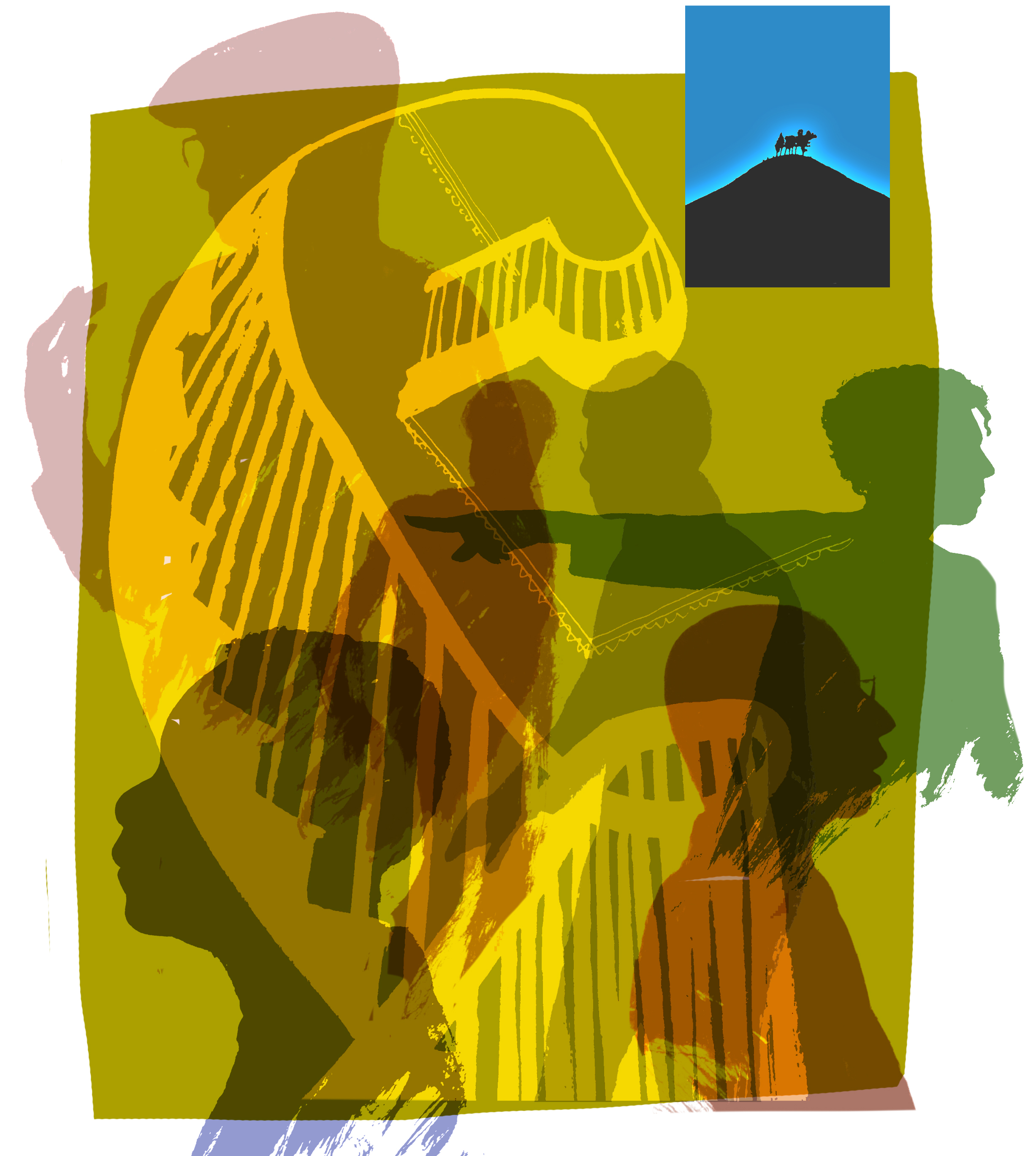
After a hugely muddy walk to the sea, I lie in the big bath on the top floor: light off, I watch the silhouette of Colmers Hill’s pines against the darkening sky. I’m sure Thomas Hardy did, too.

Andy Warhol looks a scream, hanging on the wall – six images of him being ‘strangled’. It’s his last day at the De La Warr Pavilion. We’ve seen these screenprints so many times: Mao, Marilyn, Andy… and we know the iconography. Warhol images: postcards, printed, cheap, disposable, ubiquitous. But the originals are powerful objects. The surfaces are real: luscious thick layers of ink on impasto-acrylic’d paper, big brushstrokes, throwaway squiggles. 10 Mao’s in different colourways – the murderous dictator benign and funny in rich unlikely colours. A gorgeous wall of electric chair prints: image of horror, beautiful colour.

Towner Gallery: In the middle of the huge room, there is a house. A full-size trapper’s cabin, come in from the hostile snowy landscape. Its bleached wood is almost colourless, but it’s actually not wood at all: it’s paper, photocopies tiled together over a hardboard frame – trompe-l’oeil from a few feet away. I had to feel it to find out. Inside (of course) there’s a rowing boat, and you get in, start rowing, across the lake on the big screen in front of you. As you pull on the oars, you are actually rowing the landscape around you, monochrome and bleak, sharp black fir trees – the wintry Canadian Rockies, uninhabited, menacing. You laugh, or say something to those waiting their turn. But if you were alone in here…

On the way home, a huge sun shines through low soft clouds, throwing the Downs into layers of cut-out blue.

‘The real voyage of discovery consists not in seeking new landscapes, but in having new eyes.’ (Proust)

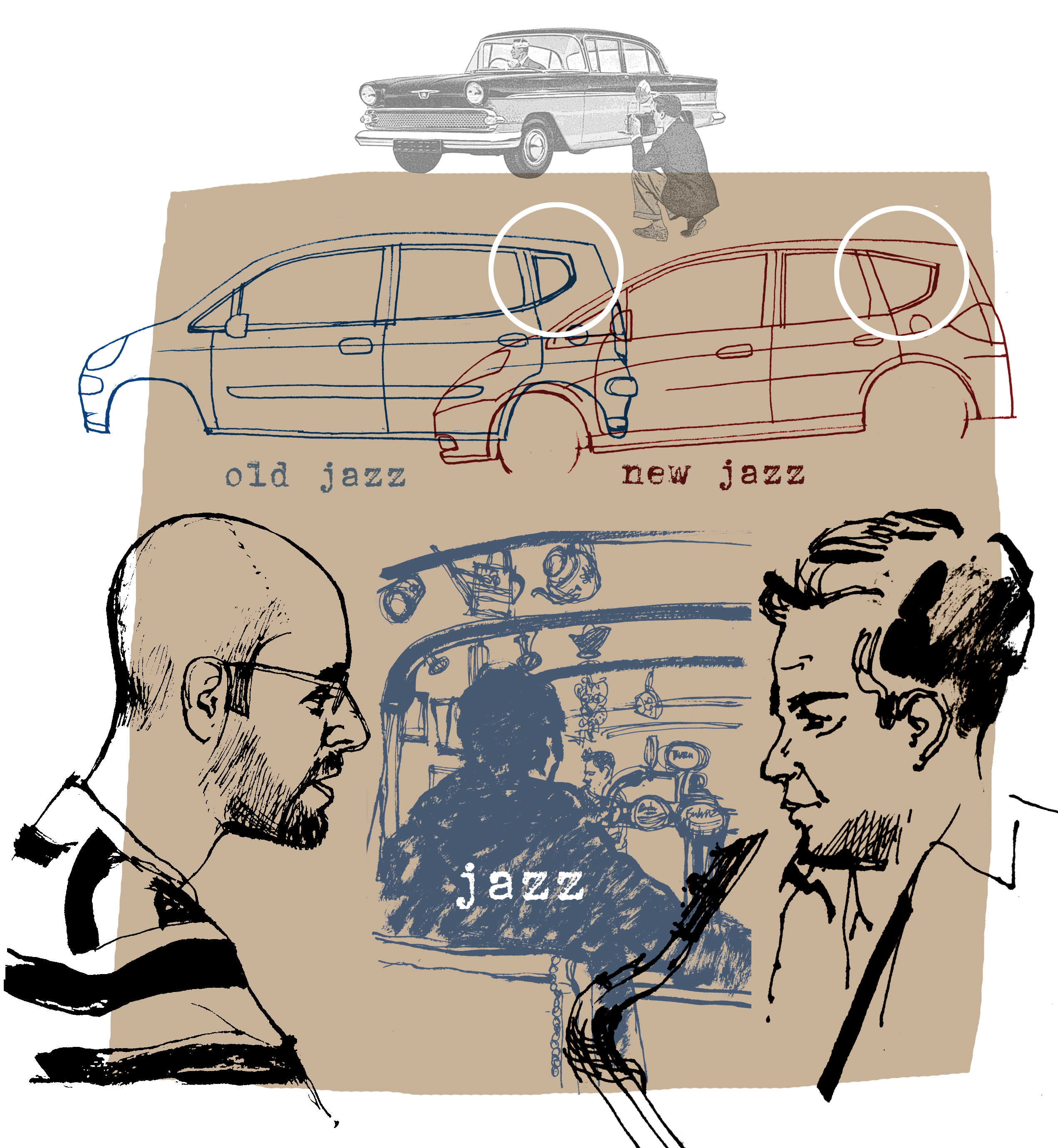
Apparently the average age of a Honda Jazz driver is 60-something. As if I care. They’ve got a great reputation for reliability and good fuel consumption, and they look quite nice. If I could, I’d have a 1959 Vauxhall Victor de Luxe, but they’re probably not up to Jazz standard, these days. So – I would recommend a Jazz to anyone, and I did, to Wolf. He’s just passed his driving test. I drive him (in mine) to Shoreham to the Honda dealer, and Andy Honda welcomes him warmly. ‘This is my friend, Michael,’ says Wolf, and I try to look more heterosexual, even blokey. Jeremy Clarkson is on the TV, wearing a peaked cap and his legs inexplicably taped together.

We three blokes go for a test drive in a new Jazz. This new one has lots of features that I could never imagine (or concentrate on while Andy’s going through them). But the roof cover slides back so you’re all under glass, like a 50’s vision of a space-age car, which is fun. It doesn’t have that nice upswept-curved rear window that I like so much in my Jazz though (see fig.), but then I’m a sucker for an upswept curve.

At The Snowdrop, Terry Seabrook’s trio is cookin’ (as they say). Tonight’s guest is the excellent Sam Miles. Barely into his twenties, Sam’s at the Royal Academy of Music, and he’s a terrific sax player. Sometimes he plays with Ska Toons, and we’re really not worthy. From his usual unassuming mien, he’s an explosive force of nature in his solos.

And while I’m on the subject: Wolf’s a really good pianist, (he studied at the Guildhall), and sometimes he plays keyboards with Ska Toons too, and he blows us away with his playing. Another jazzer.

Jazz? I’d recommend it.

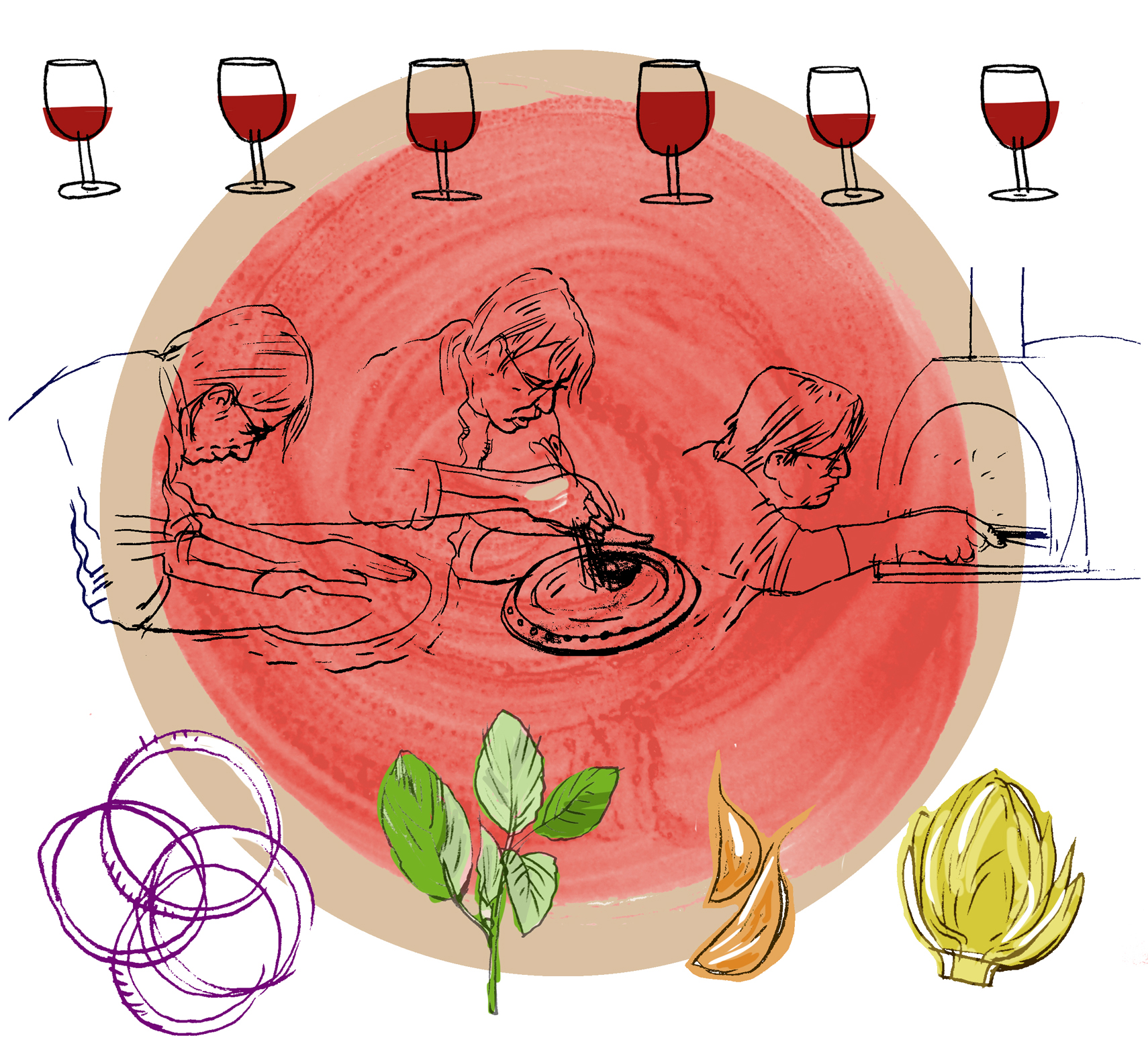
Judy and Lisa have been on a bread-making course, and tonight we’re going to make pizzas. And eat them. At Dixie’s house, we carefully carry in our trays of pizza-dough balls, that are more-or-less round, but nicely natural-looking, as if made by hand (which they are). They look great. Until we see the pizza dough that Giorgio has brought. It’s an unfair comparison, of course: Giorgio is Michelin-starred chef and restaurateur, Giorgio Locatelli, and his dough is beautiful: smooth, round, perfect. The big table is covered with boxes of toppings: mozzarella, artichokes, dried tomatoes, ham, sausage, mushrooms, anchovies, tuna, oil-soaked garlic cloves, basil, onions… and lovely wines.

Giorgio is showing us how to make the pizza shape, by kneading with flat hands, and fingers pressing and turning, on the big wooden butcher’s block, then spooning his smooth tomato paste on, spreading it with the ladle; then it’s away to choose the toppings. The children are drawing and writing their names in the semolina flour, then rush off to dismantle the sofa and build a stack of cushions and themselves, a living sandwich, shouting with joy until joy inevitably turns to tears.

Meanwhile, I make a not-too-misshapen base, and load it simply with artichokes, sausage, tomatoes and garlic (oh and anchovies), and Giorgio slides it into the wood-burning oven in the garden. I hover in hope. But the dough is broken and the pizza becomes a calzoni-shape on shovelling, which would be sort-of fine if it weren’t for the nuggets of raw sausage in it.

Meanwhile, pizzas are being churned out thick and fast and thin, and the crusts are soft, light yet chewy and sweet, and I’m sampling as many as I can. I take a gulp of this gorgeous red, put my glass down, put more toppings on, can’t remember where I put my glass, fill another, more topping, sample this, lost my my glass, fill another… Sofas reassembled, the adults are sitting around, and Giorgio is reminiscing about Lucien Freud, while I just try this one last slice…