Archives for posts with tag: Michael Munday

nomadland

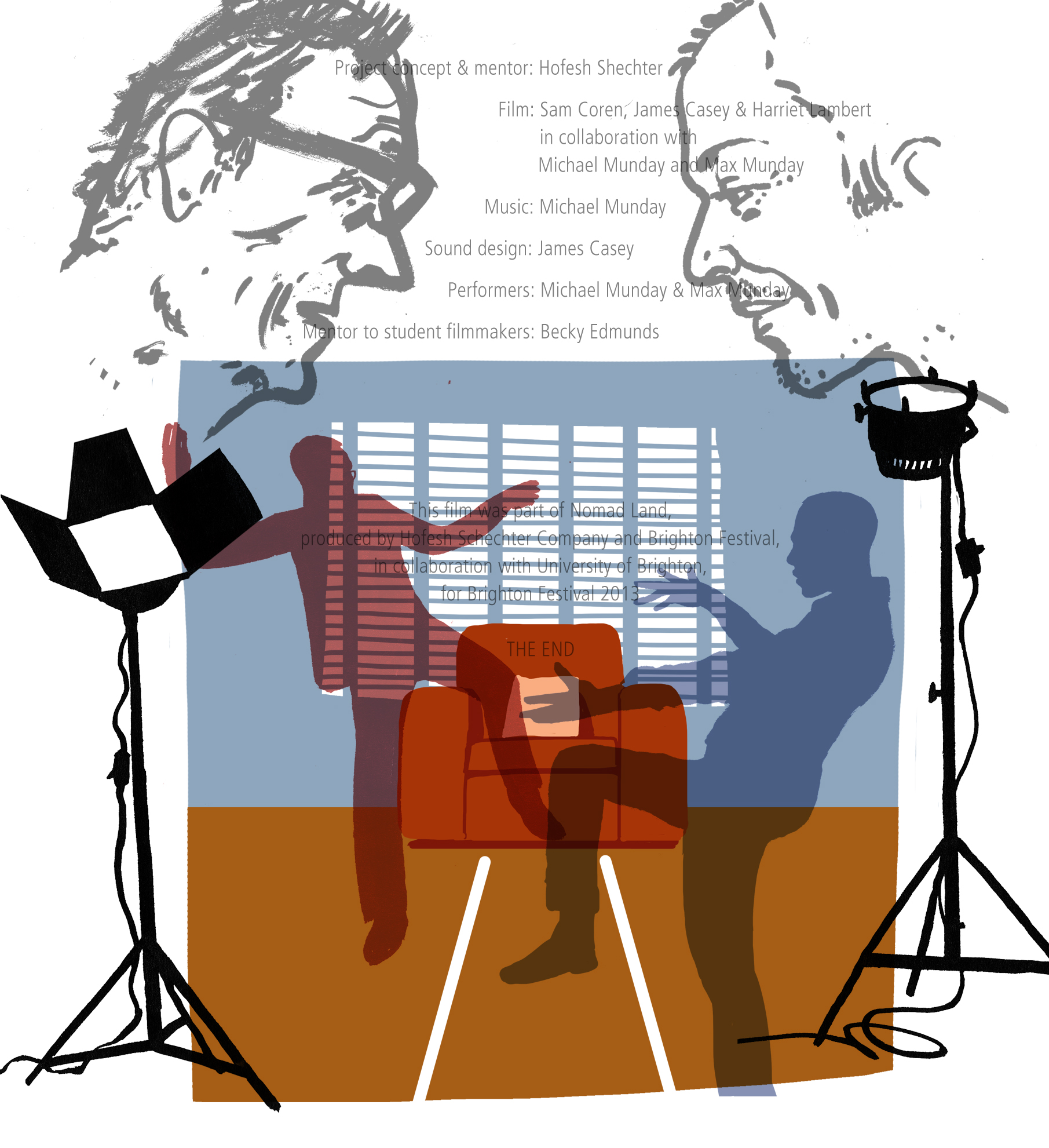
James is laying his dolly down in my living room. It’s fifteen feet long: two white plastic plumber’s tubes, a couple of feet apart. On top sits a platform with skateboard wheels, cunningly set at 45° so it can glide smoothly along the rails. And on top of that, a video camera and tripod bolted down. James and Harriet are here to film Max and me – son and father, in our capacity as, well, son and father.

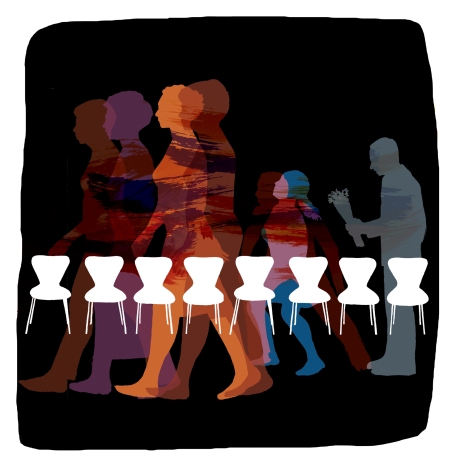
Hofesh Shechter is the Israeli choreographer whose work is ‘earthy and blunt, powered by action and raw energy’ (says The Guardian), and characterised by intense physicality and relentless, oppressive percussion. His dancers fight and struggle, and move low across the stage like animals. His production, Political Mother, was a big hit at the Brighton Festival three years ago. Now he is producing Nomad Land for the Festival: ten short films, ‘movement duets which choreographically and visually explore male behaviours’. One of them is exploring ours.

We don’t know how our film will turn out: actually we have a good close relationship. We rack our brains to think of conflict, rebellion, repression, but mostly, as we’re interviewed, we remember funny stories and poignant episodes, and lots of laughter in our little family. The formal dance pieces are not so much about struggle as parting, and now, here in the living room, we put on the disco classic Young Hearts Run Free, and dance crazily (and freely) over and in-between the dolly tracks while James, Harriet and the camera glide in and out of our male behaviours.

‘Nomad Land… In this collaborative dance and film project a group of men from across the generations come together with Brighton Dome & Brighton Festival Resident Company, Hofesh Shechter Company, and student film makers to explore the energy and complexity of male relationships.’

University of Brighton Gallery, Grand Parade, Free, Sat 4 – Sat 18 May 10am – 5pm, Thurs late night opening until 8pm
Produced by Hofesh Shechter Company and Brighton Festival in collaboration with University of Brighton

‘Uprising’ by Hofesh Shechter Company
guggcomp

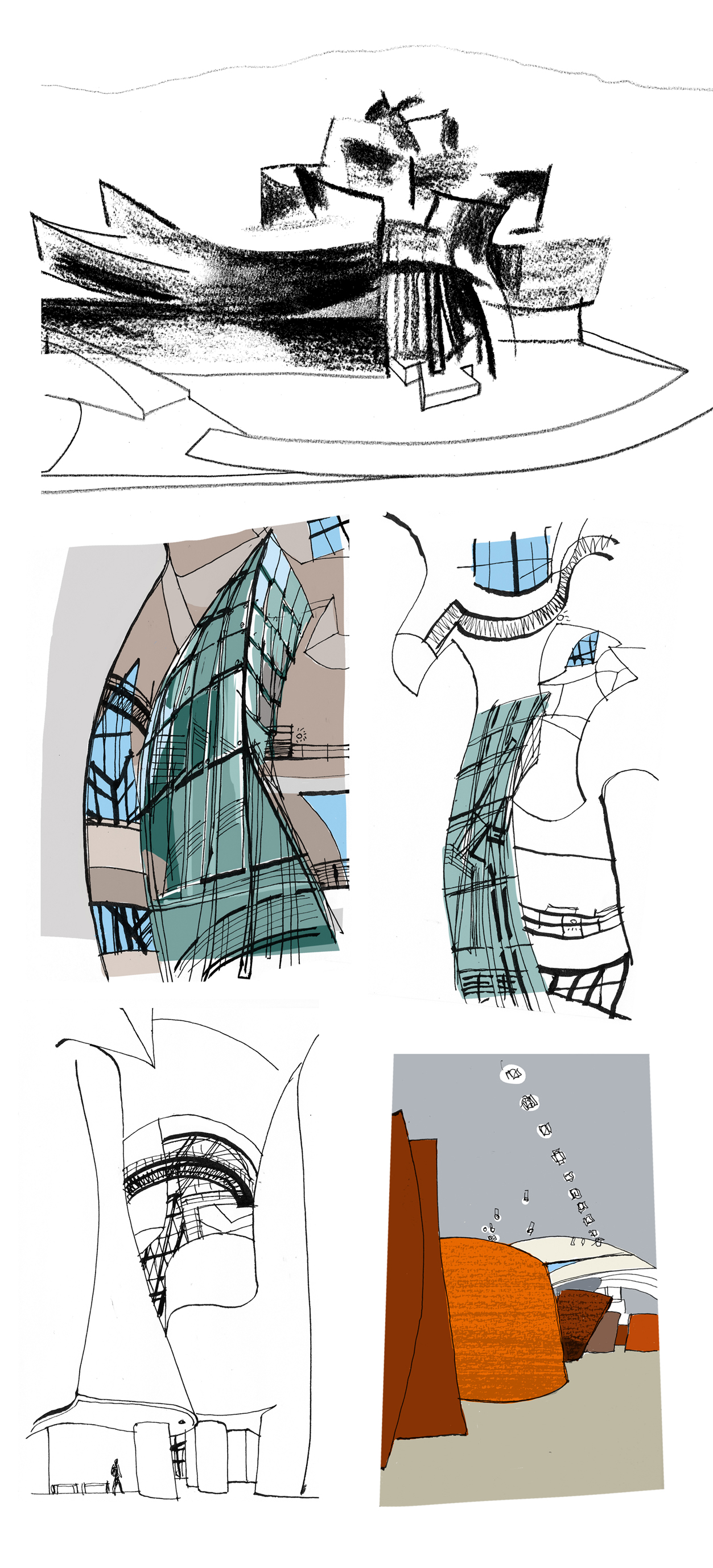
It’s a secular cathedral, a cubist ship, a vast glittering shoal of fish… Here, in the atrium of the Guggenheim, huge waterfalls of glass cascade in apparent curves from the ceiling, encasing lifts and stairs. In fact, everything is curved: the walls, the window surrounds, the ceiling, and especially the steel girders that are the armature of the building. Metal walkways snake round above your head. Right at the top, light pours in through windows with criss-cross spars, in contrast to all the other shapes. It takes your breath away.

Designed by Frank Gehry and opened in 1997, the museum was commissioned by the Basque government to revitalise the run-down port area of Bilbao, and indeed the city. It apparently took shape from Gehry’s free, looping line drawings, in which he didn’t lift his pen from the paper. You can see that freedom and fluidity in the shape of the building, seen from across the river. It’s made of steel, limestone, glass and covered in plates, scales, of titanium. They are half a millimetre thick – they give under your touch – and reflect the pink of the city and the sky’s blue. In the largest gallery, (over 400 feet long), Richard Serra’s huge rusted steel sculptures stretch away, eight of them, all over 12 feet high, in circles, spirals, S-shapes – it’s called Snake (or The Matter of Time). You walk between the massive orange plates; whoops and cries echo under the long curved roof.

We go to Café Iruna on the corner of the Plaza: walls tiled with ceramic bas-relief advertisements for wines and sherries from the early 19th century. Outside, the entrance is solidly blocked by a crowd of smokers, but once through, there’s a space at the bar to drink rioja and eat pintxos – elaborate Basque tapas, bread topped with ratatouille, salt cod, quail’s eggs, anchovies, Iberian ham, cheese – and always the thick slices of tortilla. And more rioja.

Rambert&handbags

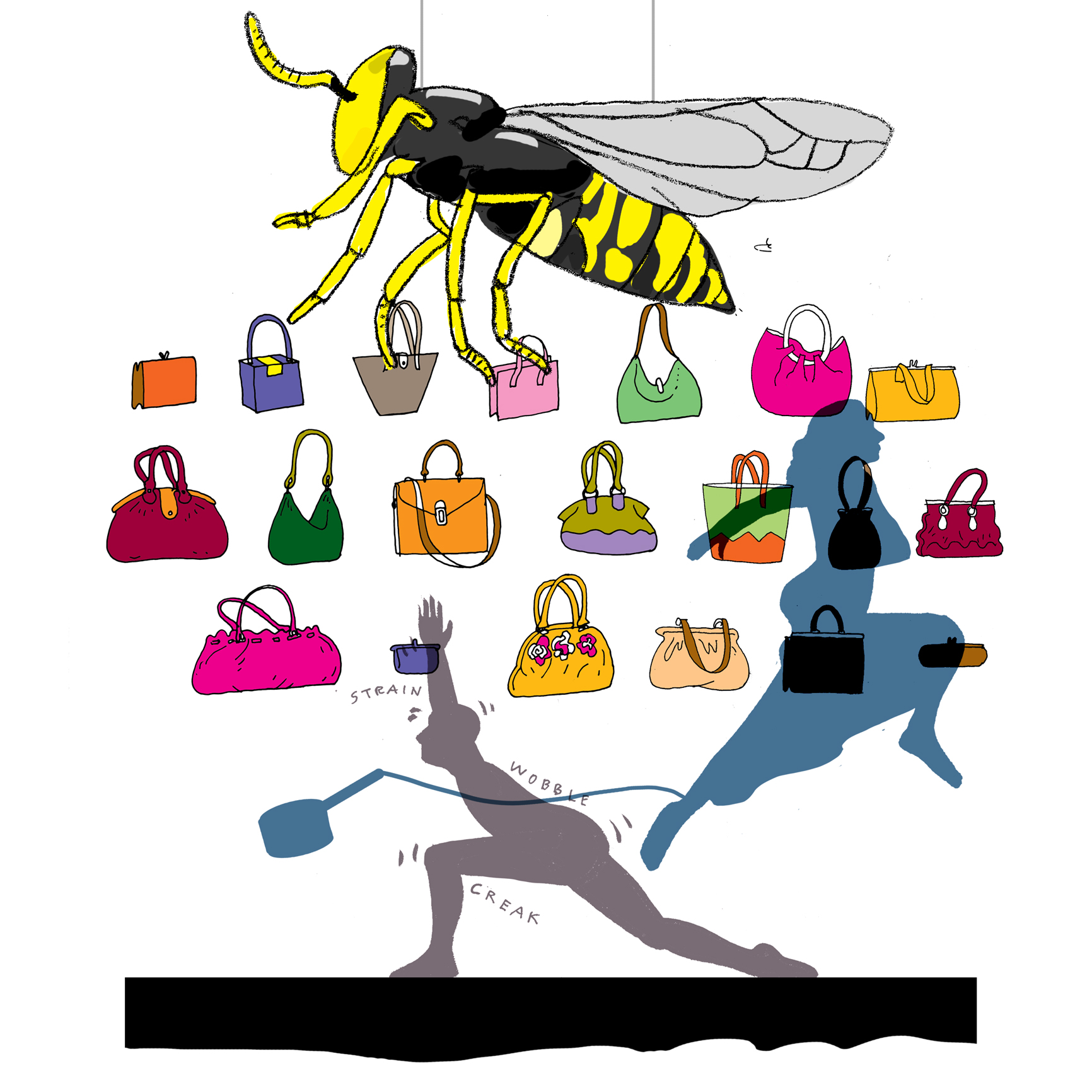
Over my head, two huge wasps hang motionless. From my position, flat on my back on the Theatre Royal stage, they are quite threatening, though motionless. I’m recovering from the first exercise. At 9.45 on a Saturday morning, Amanda, the teacher from Ballet Rambert, has just made us drop, bring one knee forward to a right angle, stretch the other leg back, lift our arms… oh, come on. We’re all over 60. A quiet word from Hannah, our project manager, and Amanda adjusts her expectations of us. She’s young, dynamic, funny, and very very fit. It’s strange to look out on the old gilded theatre, as we twist, stretch, and windmill to some loud mashup dance track booming out, but it’s exhilarating too.

After two hours of this, and the full English breakfast, we cross to the Corn Exchange for three hours of rehearsal for ‘Handbag’ – a performance involving over a hundred women dancing round their handbags, and walk-on parts for twelve men, in the vast space. It starts with one woman at each end (the audience are corralled in the middle behind hazard tape) to an extended ‘Billie Jean’, while our group huddle behind a door, trying not to laugh, talk or sneeze, before we make our separate entrances onto the floor. We do six performances, then sprint off to see the Rambert show, where beautiful young bodies fly through the air in white pants, to a video backdrop of a snake writhing through flames, a burning erotic flower and snowdrops falling into diamonds…

Pina Bausch’s company at Sadler’s Wells is a different kettle of goldfish: from inside a distorted white room, windows show a cactus garden, a tropical garden, and big tanks of, yes, goldfish. This is not ballet, it’s dance-theatre. Surreal, if not actually dada, it shows the everyday human condition in bizarre scenes. Men in dinner jackets threaten, bully and cajole women in evening dresses: I shudder each time an axe is brought on-stage (usually to chop oranges for drinks though). A distraught woman crashes from wall to wall, her arm in a sling, shackled by a saucepan; four couples waltz all around the room on their bottoms, perfectly synchronised; an old transvestite dons flippers to share the goldfish-bath; a naked man quietly sprays himself white from toe to hair… Well, you had to be there. Phew.

vertebrae

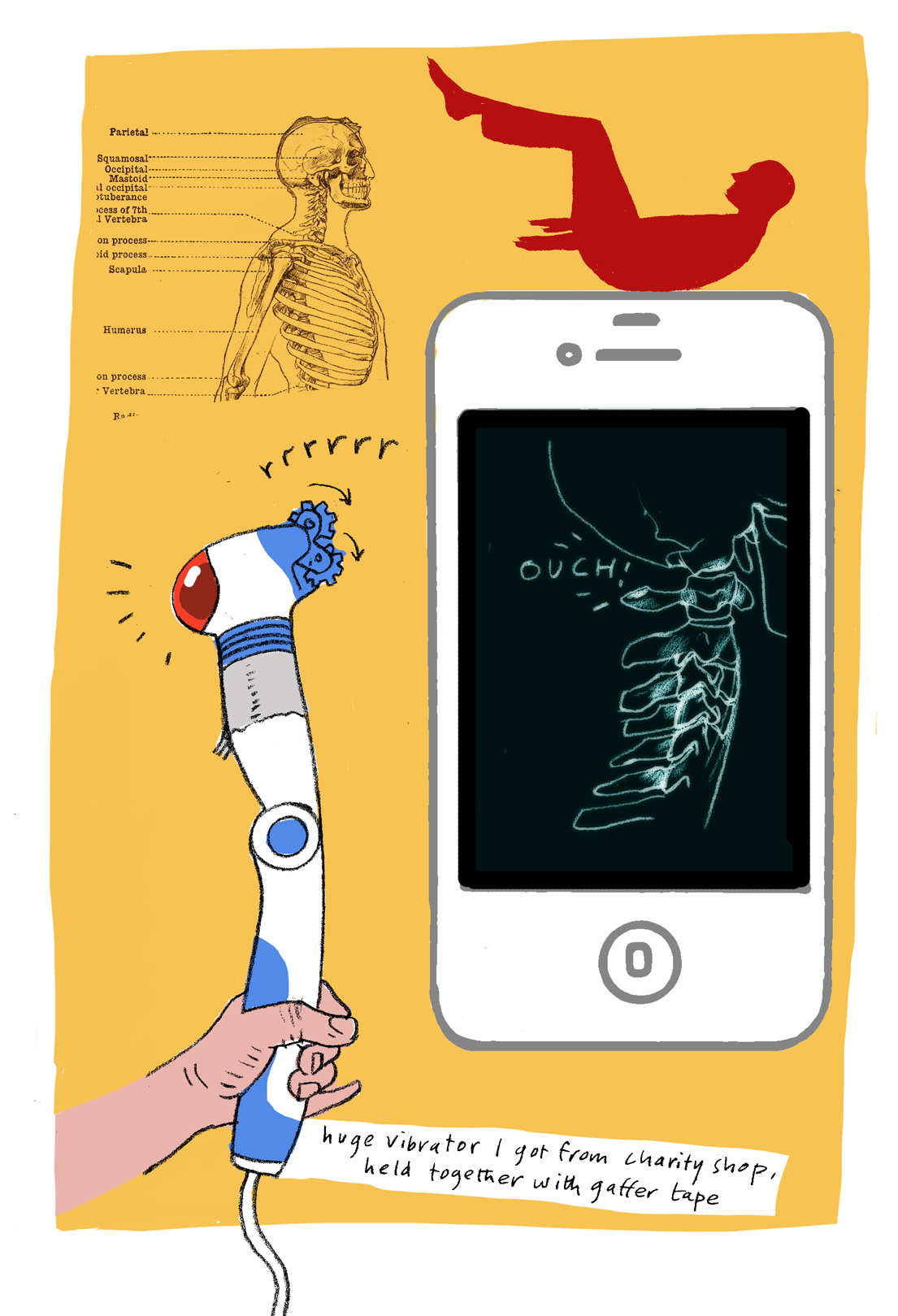
It was the new i-phone that did for me. Sorting out my contacts list for twenty minutes with my head at an angle. And then: CRUNCHKKK! Sort of whiplash without the car accident, and precious little sympathy (“What, an i-phone? Hah!”) So, some pain, admittedly diminishing, over several months, until it’s all jammed up again around the cervical vertebrae – the muscles all tensed up and squeezing the nerves, and not exactly helped by my typing this account. In fact, probably caused by sitting here at this computer, head at wrong angle (on top of a lifetime of slumping and slouching).

Lin, the osteopath, spends an hour massaging, heating, ultrasounding, and gently pulling my head away from my body, and asking “Is that tender?” (Tender, in medical language, usually translates as ‘beastly painful’), but this is that positive pain, a hopeful pain, almost pleasurable, and I come out optimistic, with a small repertoire of small exercises. Later that evening, Gill applies a huge charity-shop vibrator to my neck, held together with peeling gaffer tape. The vibrator thing, that is.

Sunday morning 11am: instead of staring contentedly at my bedroom ceiling, I’m on my back in Kingston Village Hall, doing Pilates exercises to gentle classical music. I used to go to a class with loads of other people within easy reach of each other’s mats, faces, arms, legs, but here there are just a few of us, moving to Tabitha’s quiet instructions, and no jungle panpipes muzak. This borders on pleasure…

Curse you, modern technology!

birds2

Come on birds! Swoop down and enjoy this feast I’ve prepared for you, you ingrates!

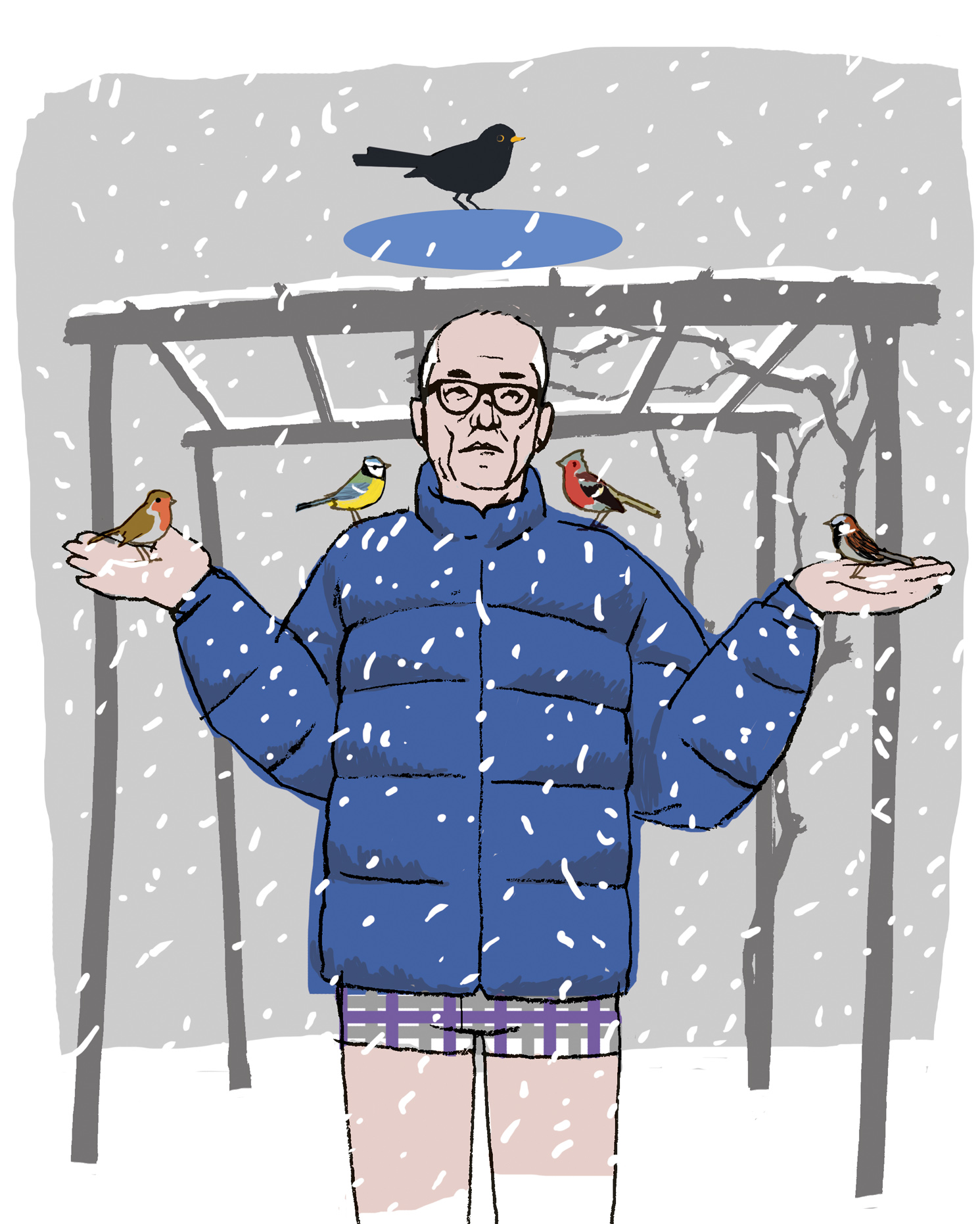
Are there more birds around the garden when it’s snowing, or do you just see them more clearly against a white background? Whatever the reason, I’m more aware of them at the moment. And full of pity as they sit in the tree, feathers fluffed up against the cold. I’ve never been particularly interested, except in the occasional bird of prey: a hawk hovering over the A27 or a buzzard high up. No twitcher, I. Still, I find myself rubbing up a load of breadcrumbs from the loaf I’m about to eat (such compassion!), and even mixing in some mashed-up peanuts, and pulling the fat off slices of prosciutto (lucky birds!), some seeds, rice… That is right, isn’t it? I’m not going to make their little stomachs swell up and burst, am I?

Anyway, I carry a blue plastic tray full of this birdfeast out into the thick snow, still falling heavily, in bare feet so I don’t slide on the treacherous decking (and also to feel the effect of bare feet in snow in a Finnish sauna sort of way) and slide it up onto the wobbly wooden arbour. Then retire to watch them all swoop! I imagine myself as a St Francis of Assissi figure, arms outstretchrd with birds sitting on every horizontal surface of me…  Except that they don’t swoop. I sit in a warm living room, reasonably still, waiting…. After 15 minutes, and many birds flying past, none have landed. Perhaps blue plastic is the most unnatural element that a bird can think of (I’m not sure if birds really think). Perhaps a camouflage-finish tray would be better.

After a while the blue has all but disappeared under snow, and birds are feeling more comfortable with the lumps sticking through the white, and they queue up to get at the food. Well, I say queue, but the thrush or starling or blackbird stands in the middle pecking away, while the sparrows, chaffinches, blue-tits and robins hop around nervously waiting for the big thing to finish, before making off fast with a crumb.

You see, in the meantime, I’ve found the RSPB bird recognition web-site… Great, the internet, isn’t it?

DLWPAV

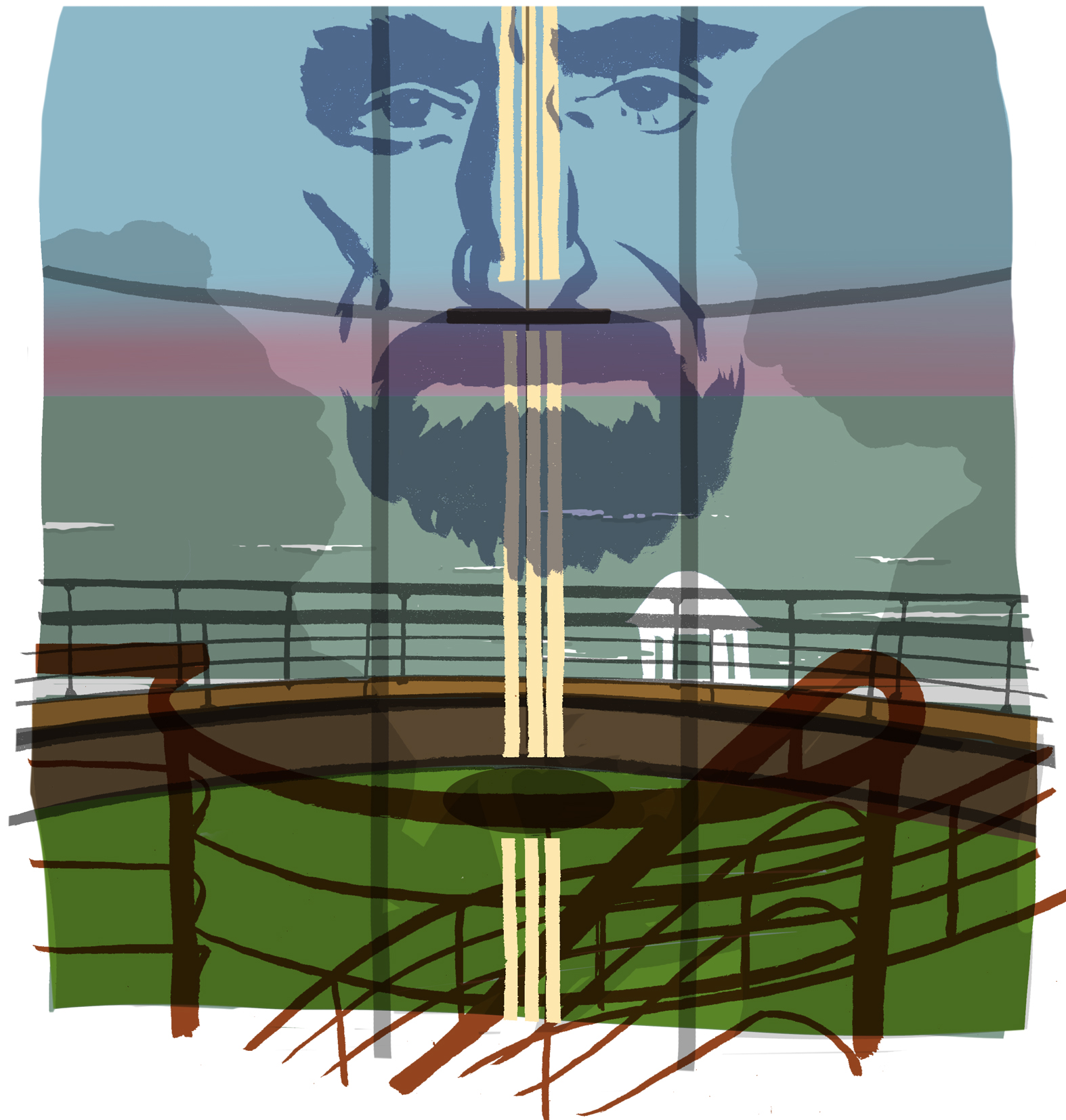
A rosy dusk outside the De La Warr Pavilion’s stairwell. The camera swings in slow-motion side to side across the curved banister, and outside on the balcony, elderly couples waltz gracefully to Schubert’s Nocturne in E Major. It’s a beautiful and moving experience. I’m in a large dark gallery, at the De La Warr, and in the middle is a large double-sided screen on which the film is projected. Outside the room is the actual stairwell. And outside that, outside the curved glass, the waves are crashing onto the beach.

It’s part of Breakwell’s exhibition Keep Things As They Are. (The title is taken from his anti-Conservative leafleting campaign Vote Conservative and keep things as they are). It’s also ironic, as his work was experimental and groundbreaking, and he was one of the key members of the British art avant-garde. He was, but died in 2005, shortly before the re-opening of the Pavilion and its first exhibition, which he’d curated. He is mostly known for his Diary, which he started in 1965 and kept for forty years. It takes different forms: collages, photographs, drawings, text and calligraphy, and video.

I am in a small room now, and on each of the four walls is a life-size charcoal drawing of Thelonious Monk in profile, walking in a circle. I put on the headphones and walk in the same direction, round and round, hearing 12 bars of Monk’s Misterioso played over and over, seeing my reflection in the glass of the drawings. I can make the 12 bars last one circuit if I walk slowly.

Finally, I see a text on a wall: 50 Reasons For Getting Out Of Bed – and they are beautiful reasons: …’Lionel Hampton solo on Stardust. Freshly poured pint of Guinness settling on the bar. White butterfly on purple buddleia…’ (It’s shocking that when he finally gets up it is with pain and nausea from his chemotherapy). Inside the dark room is what appears to be a huge photograph of his face, while his rasping voice reflects on his life. After a while you realise that his face is slowly changing. It has changed from baby to its final sunken state.

It’s deeply moving, and you leave the De La Warr with a New Year’s resolution: make every day count. See it if you can: it closes 13 January.

dance-3

From the flooded toilet floor of the Dome’s dressing rooms up to the stage area, it’s a long, cold way. Especially barefoot. Hazardous too: the steps have a metal edge. Cameraman and soundman stand impassively amongst the women changing their costumes, filming interviews. After the last two days of rehearsal, ThreeScore Dance Company are about to go on. Nerves ripple down the lines of us waiting for the doors to open, and for us to file through, finally, to an audience.

We’ve performed Bettina Strickler’s piece before, but in less than ideal conditions. Now, it’s properly lit, in classic ‘black-box’ theatre, and we’ve all come a long way in the conviction (and maybe grace?) of our movements. The group (twenty of us) are intertwined on the stage, ‘breathing’ to the Morricone score, then breaking into the fast klezmer: I and three other men finally co-ordinate our strange feints, and with a ‘Hey!’ – slap back-to-back, sink down, and are pulled off. (You had to be there, really).

Antonia Grove’s piece is complex: four of us play live music at the beginning, building to a crescendo, after bedding down plants in the bank of earth at stage front. Then the company stands in front of our triangular-back chairs, before the strange repetitive sequence begins, in total silence. We stand, then the music starts: ‘Treasures’ by Seasick Steve, and we perform the rituals of caring and tending, waiting for growth: it’s about ‘the emotional relationship that forms with something alive and rooted to the earth.’ Labour and Wait.

Ben Duke’s piece, You Can’t Miss Me, evokes the classic footage of the flood of commuters across London Bridge, leaving one man isolated in the middle: ‘Well – how did I get here?’ His is one story among many – he’s joined (but not joined) by others, also questioning their positions. We attempt to make contact, but ultimately, we’re on our own. We move, slowly, around the stage, surrounded by the richness of Glenn Gould playing Bach, and for me it’s a truly beautiful, euphoric moment. This is the culmination of a year’s work in a parallel life, a life I’d never imagined. Dance.

From the bridge you look over the basin of the River Calder, at a necklace of orange buoys above the weir; on the other side there’s a bizarre cartoon figure, a sort of ten-foot Mr Potato-head, made of ducting, a salt skip, bins and brushes, hanging from a crane. Below it are the barges and narrowboats clustered under the old industrial buildings of Wakefield’s waterfront. The bridge leads us over to to The Hepworth Wakefield, the two-year-old art gallery that houses a stunning collection of Barbara Hepworth’s sculpture, together with works by Henry Moore, both Wakefield-born.

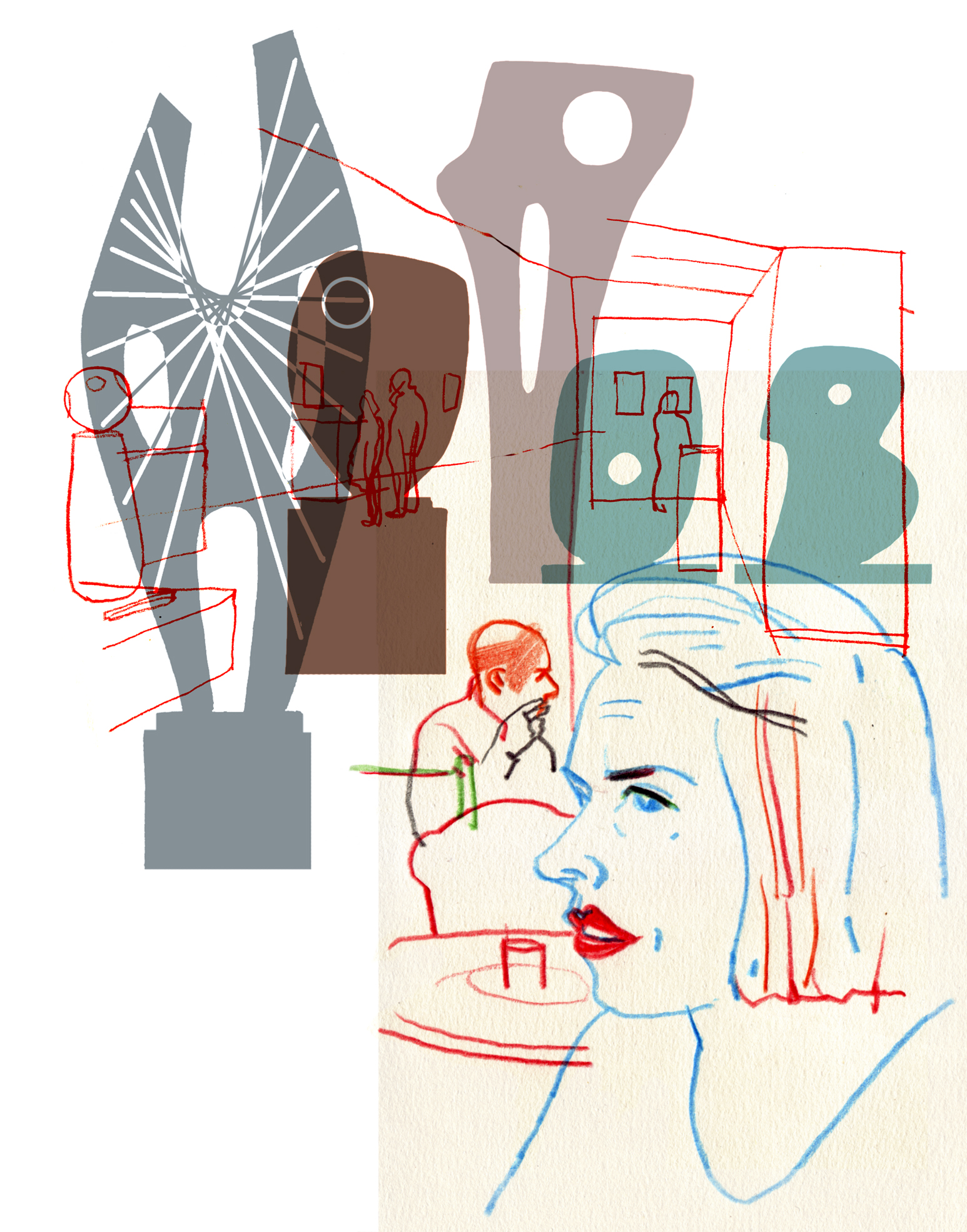
Inside, the picture windows frame the river-bank willows, and the sun casts long shadows across the gallery floor and lights up the familiar Hepworth shapes: curved abstracts, (yes, with holes, in the style beloved of 50’s cartoonists), smooth surfaces contrasting with rough textures. Many of these are her plaster sculptures, and there are drawings and working models: here’s a full-size maquette of the Oxford Street John Lewis ‘Winged Figure’, and small smooth abstract still lifes, large wooden egg-shapes, everywhere surfaces that you want to stroke, and the golden afternoon light pouring in.

In the shop (who can resist a gallery shop?) I buy some coloured pencils. There was a time when they were my chosen medium, and I sit and draw Danielle, and drink a Belgian beer. Art galleries – they always start me up again.

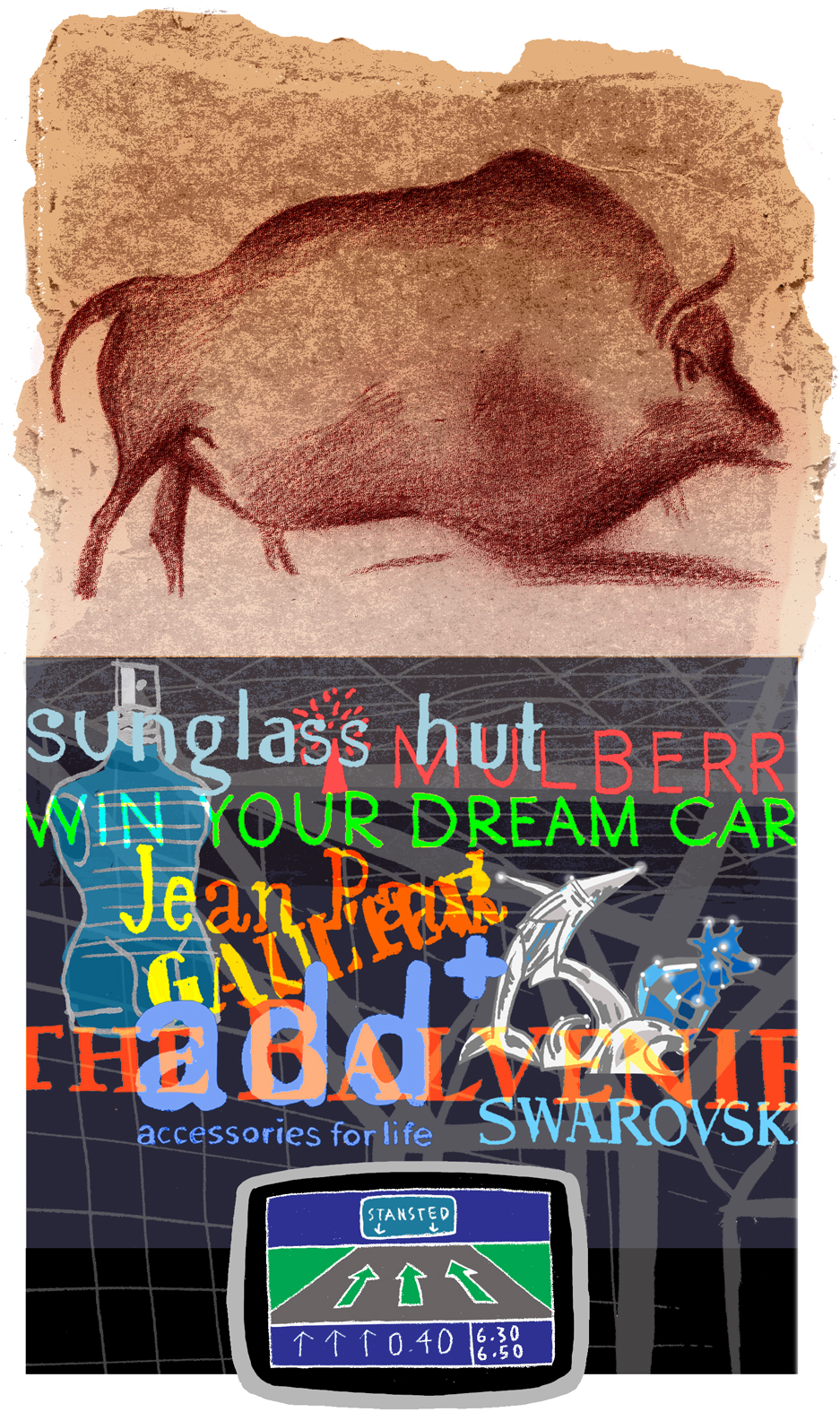
6.30am – satnav bright in the rainy dark – to Stansted Airport, our lanes clear, but incessant headlight stream swarming in to London. Imagine that your job requires you to drive into London every day at 6am; perhaps it does. Stansted Airport: modern world writ large. Huge steel beams frame World of Mammon, thousands of shelves of exquisitely-displayed perfumes clothes phones phone accessories spirits wine scarves ties food… high-gloss images of airbrushed perfect people buyingshoppinglivinglifetothefull: don’t you wish you were? Instead of fretting about the luggage restrictions of Ryanair (1 bag under 10Kg in the cabin – otherwise an extra £25 each way).

The American is dabbing the little wound on his bald head: he was warned about the low roof and the stalactites but immediately walked into one. The cave, though immaculate, still has that deep rich old smell, beyond time. Above us two reindeer are nose-to-nose, painted onto the rock shelf. The standing deer seems to be licking the other’s snout, standing over it, sympathetically, or triumphantly – who knows? A herd of bison stampedes around the walls at head height; the undulating surface of the walls would give body and movement to their forms, especially when lit from below by flame. 17,000 years ago artists were painting these living animals in manganese onto the wall, and they still live.

http://www.hominides.com/html/lieux/grotte-font-de-gaume.php

Sadly, the guest poet had to cancel, and, in a helpful and completely mad moment, I offered to step in. And now I can’t find my glasses as I’m about to read to seventy-odd children and adults, from a book of Basho’s beautiful haiku. It’s another Lewes Junior Film Club event: the films are poignant and very poetic – The Red Balloon and White Mane, both made in the 50’s by Albert Lamorisse. Before the showing, the kids sit at the tables in All Saints, drawing up storyboards (involving Lewes and – yes – a red balloon) and now (when it comes to it) I suddenly get nervous. I read a couple of haiku that I made up; we’re to make some up together on a big smeary white board.

Once on the Kisoji trail in Japan I stepped on a snake (apart from snakes and bears, there are very sophisticated toilets on the trail) so I tell them this:

Scared by a snake on the path–
How comforting is a warmed
toilet seat!

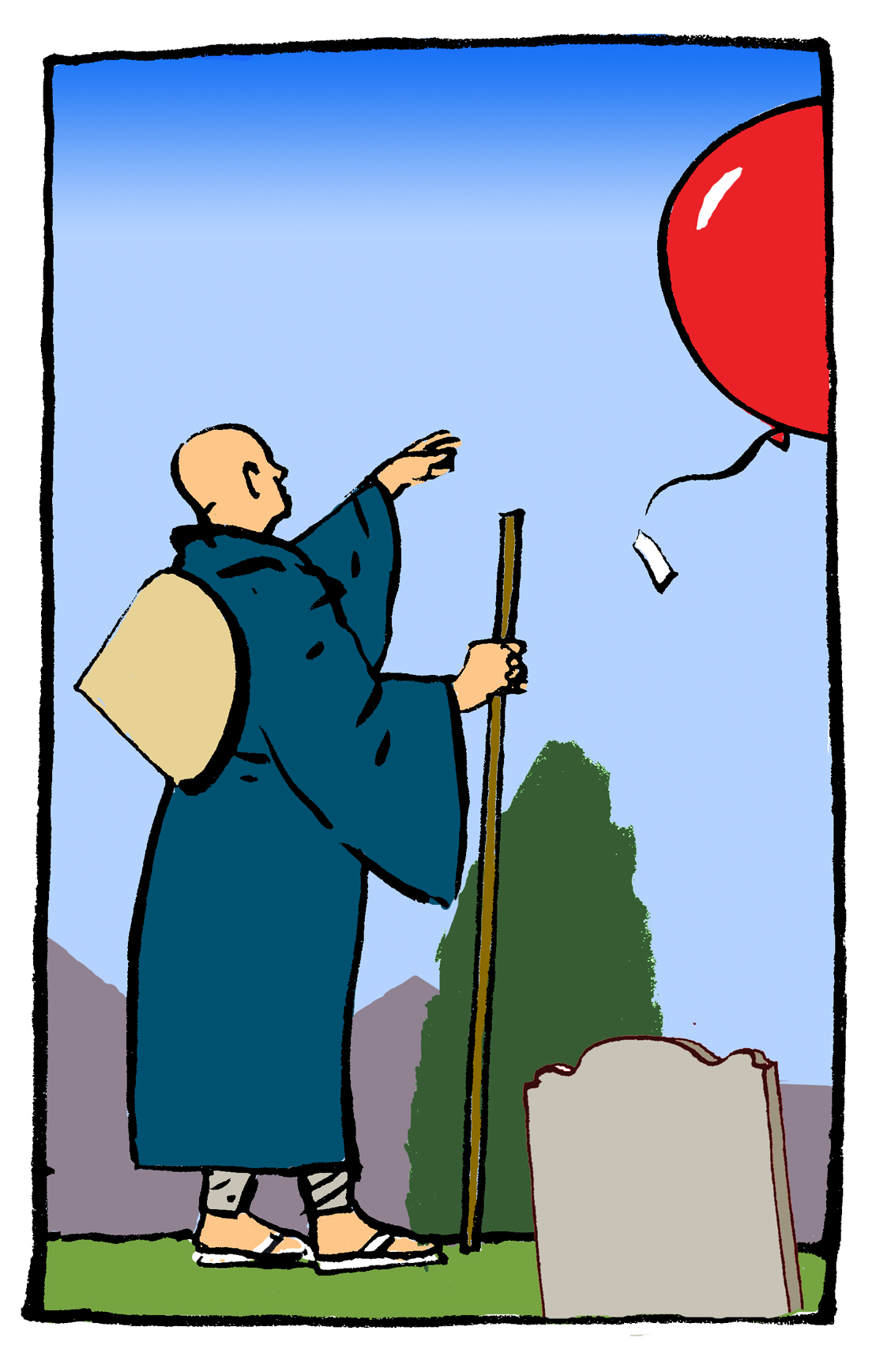
which gets a bit of a laugh. After the first film, the kids write messages on tickets hanging from a great cluster of red balloons, and then burst out into the sun in All Saints’ churchyard to launch them.

Silent stone walls.
Then a squeaking red eruption
Up! go the balloons

but

One red balloon
Drifts along the golden street
Looking for an owner

(Disclaimer:
Seventeen syllables do not
a haiku make–
Necessarily)